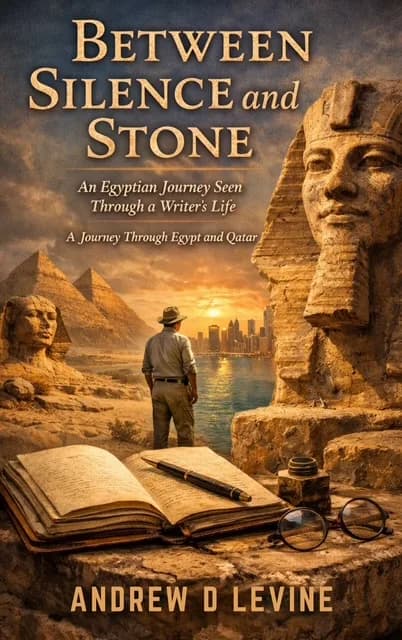
Between Silence and Stone
60 min read · 11,987 words · free · 14 views
Between Silence and Stone
Between Silence and Stone
An Egyptian Journey Seen Through a Writer’s Life
A Journey Through Egypt and Qatar
Author’s Note
This trip did not begin with Egypt.
It began with India not happening.
For the second year in a row, I had hoped to return there—to places that had lodged themselves in memory and imagination, to streets and rhythms that had already begun to feel familiar. Barbara, understandably, wanted a pause. One year away, she said. A break. And then, almost as an aside, she mentioned something she had always wanted to see--Egypt.
It was not a destination I had ever seriously considered. For Jews of our generation, Egypt was not so much forbidden as it was quietly crossed off the list—acknowledged, respected, but assumed to be out of reach. Something ancient and admired from afar. A dream that belonged more to history books than itineraries.
Barbara had carried that dream longer than I knew.
So we pivoted. India would wait. Egypt would not.
The booking itself felt tentative, as though we were testing a boundary rather than planning a vacation. We read the brochures, studied the routes, and reassured ourselves with the language of tour companies and river cruises. Everything looked polished, manageable, safe. What the materials understated—what would shape nearly every day that followed—was that Egypt requires something from you before it gives anything back.
Namely, your sleep.
From the moment we arrived, we learned that to see Egypt properly meant waking before it woke fully itself. Every day began early—often uncomfortably so—to beat the crowds that arrive not in trickles but in waves. Even in December, Egypt is busy. The monuments are not lonely relics waiting patiently in the sun; they are shared spaces, negotiated hour by hour, morning by morning.
There were other surprises too, quieter ones.
In the cities, silence does not exist—not really--even high up in expensive hotels, the street makes itself known. Horns cut through the night. Voices drift upward. The call to prayer marks time with an authority no clock can match. Windows close, curtains draw, and still the city speaks. Sleep becomes lighter, more alert--you are always aware that life continues just below you.
It became clear that none of this was an inconvenience.
It was instruction.
The pyramids and temples of Egypt were not abstractions to me, or icons glimpsed from a distance—they were places I walked through slowly, often tired, sometimes overwhelmed, absorbing their scale through firsthand experience rather than imagination. This journey unfolded not as a guidebook exercise, but as a personal travel chronicle shaped by early mornings, crowded monuments, silence, noise, and the steady realization that Egypt does not offer itself easily—it asks something of you first.
Egypt does not bend itself to visitors. It does not lower its voice. It does not slow its pace. It simply allows you in, provided you are willing to adjust.
Barbara and I were.
We left on the morning of December 1st. Our routing took us through Doha, though only briefly—a few hours between flights, enough time to register impressions but not to draw conclusions. Still, some places announce themselves quickly. Doha did.
It was clean, composed, almost meticulous. The buildings rose with confidence—an architect’s dream in both conception and use. Streets were wide and oddly calm, traffic light to the point of near absence. People were friendly in an unforced way, efficient but warm. Nothing pressed in on you.
It was only a glimpse. We would return at the end of the journey, when Egypt was behind us and reflection unavoidable. For now, Doha existed as a quiet counterpoint: modern, orderly, restrained.
Then we boarded again and continued on, toward a country that would offer none of those comforts so easily.
I wrote much of this journey day by day—sometimes with help, sometimes on my own—trying to capture impressions before they were smoothed out by distance or hindsight. What follows is not a guidebook, and it is not an academic history. It is one person’s attempt to make sense of what it feels like to stand in places that have outlasted every story we tell ourselves about permanence.
India has shaped my writing life in profound ways. Egypt reshaped my sense of scale. Somewhere between the two lies the work I continue to do—observing, questioning, recording, and trying to place human ambition inside a longer frame.
This book is written primarily for friends and family, but also for readers who are curious about the worlds behind my fiction—how places seep into imagination, and how travel, when taken seriously, changes the way you look at everything that follows.
If it does one thing well, I hope it slows you down.
That, in the end, may be Egypt’s greatest lesson.
Part I – Arrival & Alexandria
Egypt does not ease you in.
By the time we reached Alexandria, any illusion of a gentle transition was gone. The city announced itself immediately—not visually at first, but audibly. Horns layered over one another without apology. Voices rose and fell in constant negotiation. Even before we had fully oriented ourselves, it was clear that this was not a place that waited for visitors to catch up.
Alexandria is not Cairo, and it does not pretend to be. There is the Mediterranean here, a coastal light that softens the edges of buildings and memory alike. But whatever gentleness the sea provides is quickly overtaken by movement—cars, people, commerce—each insisting on its own right of way.
Our hotel was the Steigenberger Cecil, a grand old building that has stood along the Corniche for nearly a century. It carries its age honestly. Corridors feel slightly compressed by modern standards, and the bones of the place clearly predate climate control and soundproofing. Still, there is a solidity to it—this is a hotel that has outlasted fashions and expects to outlast a few more.
Barbara did not take the city in quietly.
The first thing she did was close everything. Windows first. Then the blinds. One by one, sealing the room as if sound itself might be negotiated away. It was a shame, in theory. The harbor view from our balcony was spectacular, the kind of scene hotels use in promotional photographs. But Egypt was not interested in being admired from afar. It had already pushed its way inside.
Barbara called the front desk to ask about a room change.
They were polite, accommodating in tone if not in substance. A quieter room was possible, they said—but it would mean giving up the suite. The alternative was a much smaller room in the back of the hotel. Same price. No view. No balcony.
She paused, weighed it, and relented.
Eventually the blinds came up again. Not all at once, but gradually. Even on the top floor, the noise never disappeared entirely. Horns softened. Voices blended into a steady human hum. The call to prayer arrived on schedule, no longer startling, just present.
That adaptation—quiet, reluctant, inevitable—was our first lesson. Egypt would not be shut out. It would be lived with.
That first day, we kept things deliberately simple. We walked.
The Corniche runs along the Mediterranean like a public commons. We covered a few miles at an easy pace, watching the harbor come in and out of view, passing fishermen, families, vendors, and traffic that never fully clears but somehow never locks up either. It was orientation, not exploration.
Alexandria – Day One
The next morning, at nine not so sharpish, we met our private guides Rasha accompanied by her husband Karim.
Karim’s background added another layer to how the two of them worked together. While fully Egyptian, he has French roots and speaks fluent French. He is a fully licensed guide himself and often leads large, French-only tour groups—the kind that move through sites with schedules, headsets, and momentum. Rasha’s work is different. She handles smaller, more personal tours like ours, where conversation matters as much as coverage and days are shaped around curiosity rather than checklists.
Together, they covered both ends of the spectrum. For us, it was the right balance.
We began near Pompey's Pillar, and the Serapeum ruins, where Alexandria’s ancient ambition still presses upward from the ground. Nearby were the Al Kara and Al Toubgia Ghetas catacombs—reminders that the city’s history is layered vertically as much as chronologically.
At the Roman amphitheater at Kom el-Dikka, the scale surprised us. Smaller than expected, more intimate. Discoveries here are ongoing, Rasha explained, pieces of the city still surfacing long after they were assumed lost.
We made a brief stop at the Abu al-Abbas al-Mursi Mosque. Its interiors were beautiful, but major renovations were underway, leaving the space unsettled—grand, but temporarily disheveled.
From there we moved to Saint Mark's Coptic Cathedral, a living religious site rather than an artifact. The tone shifted immediately—present, practiced, and quietly enduring.
By midday we were back at the water at Qaitbay Citadel, facing the Mediterranean from the site of the ancient lighthouse. Practical, watchful, and unapologetically functional.
We had crossed both East and West Alexandria by then—two halves of the city with distinct rhythms.
We ended the afternoon at White and Blue, a Greek restaurant overlooking the harbor at the yacht club. Late afternoon light softened everything, including our fatigue.
We invited Rasha and Karim to lunch, and both joined us easily. Conversation drifted from history to daily life, the kind of exchanges no guidebook captures.
That night, after resting, we ventured out again and stopped at Delices Patisserie & Cafe. Barbara ordered Egyptian coffee.
It arrived thick, opaque, unapologetic. It looked—and tasted—like mud.
An acquired taste.
A Word About Alexandria
Before moving on, it’s worth pausing to say something about Alexandria itself.
This is a Mediterranean city in the old sense of the term, subject to weather as much as history. Wind, salt air, and humidity work on buildings slowly and relentlessly. Along the Corniche, façades show their age openly—paint peels, stone darkens, balconies sag just enough to suggest long use.
It reminded me of my grandmother’s version of Miami—before reinvention, before glass towers—when cities aged in public. Similar scenes exist throughout the Mediterranean.
From my vantage point, there was little evidence of renewal underway. Whether that reflects money, politics, or priorities is hard to say. Alexandria does not appear to be in a hurry to remake itself.
This is not a criticism. It is an observation.
Alexandria wears its age plainly and without apology.
Alexandria – Day Two
Our second day began at the Alexandria National Museum, a compact but thoughtful overview of the city’s long life. Sculptures, coins, funerary objects, and everyday artifacts trace Alexandria’s many eras without pretending they were ever neat or self-contained.
We made quick stops at Bab Sharki and Wabour El Miyah, transitional neighborhoods that showed how the city flows rather than pauses.
Then came the Bibliotheca Alexandrina. The original library did not vanish in a single catastrophe, but faded through fire, neglect, and political change over centuries. The modern replacement looks forward instead of back: a bold circular structure etched with scripts from dozens of languages, filled with light and space.
I asked a librarian if they carried my books. They did not. But she handed me a form and said they would order them.
Indian murder mysteries in the Library of Alexandria. The thought lingered.
Lunch that day was Greek again, this time with Rasha alone—Karim had another commitment. We ate at Santorini, seafood prepared differently than back home, lighter and closer to the water.
Later we visited the Royal Jewelry Museum, housed in a former royal mansion. The jewels were extravagant, unapologetic, and sobering—objects meant to signal distance from ordinary life.
We ended our time with Rasha at the Montaza Palace Gardens, the grounds of the former royal summer residence. Families picnicked, couples strolled. A place to step away without leaving.
Back at the hotel, there was no dinner. Lunch comes late in Egypt; dinner is rarely serious. We returned to Delices one last time for a late snack.
Pickup was scheduled for eleven the next morning.
Cairo was next.
Alexandria to Cairo
We left Alexandria late morning, an eleven o’clock pickup and a three-hour drive ahead of us. A limousine in name more than in spirit—comfortable, efficient, and intent on covering distance rather than making an impression.
There wasn’t much to report, which in itself felt notable.
The highway south was mostly deserted, wide and functional, cutting through areas that appeared largely commercial or industrial. Warehouses, service roads, stretches of land waiting for purpose. It was Egypt between destinations—neither ancient nor theatrical, just utilitarian.
The only detail that lingered were the dovecotes.
They appeared periodically along the route—tall, cylindrical or box-like structures dotted with small openings, unmistakably purposeful once you knew what you were looking at. These were pigeon or dove coops, housing birds not as pets but as food, raised with an efficiency that made the intention clear.
It was a small reminder of perspective. In Egypt, birds are dinner. Sentimentality doesn’t enter into it. What we might associate with hobby or affection here is simply sustenance there. The distinction wasn’t jarring so much as instructive.
Barbara and I watched the landscape pass without commentary. After two full days of Alexandria, the quiet of the drive felt earned. Egypt, for once, receded rather than pressed in.
That wouldn’t last.
Cairo was waiting.
Arrival in Cairo
Cairo announces itself long before you reach it.
Traffic thickened miles out, lanes dissolving into suggestion rather than rule. What had been empty highway quietly surrendered to density—cars, buses, trucks, horns layered without hierarchy. Alexandria had been busy; Cairo was relentless. This was not a city you entered. It was a city that absorbed you.
The scale was immediate and difficult to process. Buildings pressed closer together, rising higher and with less apparent regard for symmetry or pause. Where Alexandria had stretched itself along the Mediterranean, Cairo felt stacked—layer upon layer of humanity, commerce, ambition, and exhaustion.
And then, just as abruptly, we turned inward and crossed into calm.
We arrived at the Four Seasons Hotel Cairo at Nile Plaza, and the city receded behind glass, gates, and deliberate quiet. The transition was almost disorienting. Outside, Cairo surged. Inside, everything slowed.
The hotel sits directly on the Nile, and it understands the privilege of that position. The design is modern and restrained—confident without being showy. Staff moved with practiced ease. Voices softened. Luggage disappeared. Cold towels appeared. It was luxury doing what it is meant to do: not demanding attention, but offering relief.
Our room faced the river.
The Nile moves differently than the city that surrounds it. Wide, unhurried, indifferent to the chaos along its banks, it carried with it a sense of continuity Cairo itself does not always allow. Boats slid past in steady rhythm. Lights fractured and reassembled on the surface. The river did not care how many millions lived beside it. It had seen more, and it would see more still.
There was no point pretending this was a proper stay. We would only be in Cairo for two nights before the Uniworld portion of the trip began, and then again for another two nights when we returned from Luxor. Suitcases stayed half-open. Clothes were laid out with intention rather than optimism. Egypt had already made clear that it would not unfold gently, and conserving energy felt less like laziness and more like preparation.
We took naps.
Not indulgent ones—practical ones. Short, deliberate pauses meant to blunt the edge of fatigue that had already begun to accumulate. Early mornings had become routine in Alexandria, and the Nile promised more of the same. Sleep, when it appeared, was something to accept without ceremony.
The room itself encouraged restraint rather than excess.
The furnishings were clean-lined and understated, designed to calm rather than impress. Neutral tones. Comfortable seating arranged for use rather than display. Lighting that could be softened at will—an underrated luxury after days of glare and stone. The bed was generous without being theatrical, the kind that invites rest without pretending to be an event.
The bathroom was exactly what you hope for at this point in a trip: spacious, efficient, quietly indulgent. A deep soaking tub. A separate shower with real water pressure. Thick towels that suggested recovery rather than rotation. After days of traffic, dust, and constant motion, it felt like a reset button disguised as plumbing.
Throughout it all, the river held steady.
By day, it asserted its breadth and patience. By night, it softened into reflection and movement. Cairo churned behind us, but the Nile refused to participate. That contrast mattered.
Instead of dinner, we opted for a high tea in the hotel lobby. It was done properly—an English-style interlude with savory appetizers, neatly assembled sandwiches, and desserts to finish. It felt civilized in the best sense of the word, a pause rather than a meal. It was while we were having tea that Sandy arrived, followed shortly afterward by Larry and Lucy, just as we were finishing up. No one had dinner again that night.
We weren’t hiding from Egypt. We were pacing ourselves.
Egypt had already made clear that it would not wait for us. The least we could do was meet it alert.
Cairo — A Day on Our Own
Our first full day in Cairo was deliberately unstructured.
Before joining the Uniworld group, Barbara and I decided to spend the day on our own—no shared pacing, no compromises, no obligation to move on when curiosity wanted to linger. There was one reason for this decision, and it stood just west of the city.
The Grand Egyptian Museum, universally referred to as the GEM, had only recently opened. Even unfinished in places, it was already clear that this was not simply a new museum. It was Egypt’s attempt to reset the narrative—to present its history on its own terms, at its own scale.
The GEM houses material that for decades had been scattered, compressed, or inadequately displayed elsewhere in Cairo. Monumental statuary dominates many of the galleries: colossal kings and queens, gods carved in stone meant to intimidate as much as inspire, now given space and light rather than crowding. Reliefs, stelae, and inscribed blocks are positioned so hieroglyphs can be read as language rather than decoration.
Beyond royalty, entire sections focus on daily life—tools, furniture, jewelry, cosmetics, weapons—objects meant to be used rather than admired. Funerary practices are treated with seriousness rather than spectacle. Sarcophagi, canopic jars, and burial goods are carefully contextualized, reinforcing that death in ancient Egypt was not an ending but a logistical challenge requiring planning, resources, and belief.
And then there is Tutankhamun.
For the first time, the full contents of his tomb are displayed together. Gold dominates, of course, but what lingers are the human details: walking sticks worn smooth by use, modest personal items preserved alongside unimaginable wealth. Grandeur and intimacy occupy the same rooms.
We knew immediately that a standard group visit would barely skim this material.
So we hired a private guide—just for the two of us—for an extended visit. His name was Moustafa, a certified Egyptologist. In Egypt, that title is not honorary. All licensed guides are required to hold a university degree in Egyptology, and it shows quickly. This is academic training translated into clarity rather than recitation.
Moustafa is also a character.
He is the author of A Land Called Ancient Egypt, and his public guide profile features him posing cheerfully in full pharaonic costume—headdress and all. He did not wear it for our day at the GEM, but the personality was unmistakable. He was animated, opinionated, precise, and entirely at ease moving between scholarship and humor.
He was also candid about the museum’s newness. The GEM had only recently opened, and even the guides were still finding their footing. Routes were being refined. Emphases adjusted. Some galleries felt newly settled; others were still discovering their voice. We were early visitors—not pioneers, but close enough to sense the place still becoming itself.
The building reinforced that impression.
Vast and deliberately modern, it avoids imitation of ancient forms. Instead, it frames them. Sightlines are intentional. Light is controlled but generous. Massive statues are positioned to assert presence rather than compete for attention. From certain interior vantage points, the pyramids align visually through glass and stone—a quiet reminder that the museum is not replacing Egypt’s monuments, only contextualizing them.
Separate from the main structure is another extraordinary space: the building housing Egypt’s ancient boats.
Here, full-length ceremonial vessels—wooden boats buried thousands of years ago near royal tombs—are displayed intact. These were not symbolic miniatures but functional craft, meticulously constructed and disassembled for burial. Seeing them reassembled at scale makes their purpose unmistakable. These were vessels meant to carry kings not just across water, but into eternity.
Moustafa adjusted the pace constantly, reading our interest and energy. When something caught our attention, he slowed. When a point had landed, he moved on. This was not a lecture. It was an extended conversation with the past, guided by someone fluent in its language.
By the time we finished the GEM, we were ready for lunch, and Moustafa offered us a choice.
We could eat at a restaurant overlooking the Nile—or at one facing the pyramids and the Sphinx.
Given that we were about to spend the next two weeks on the river, the decision was easy.
We chose the pyramids.
Lunch was at the Great Pyramid Inn, a modest rooftop hotel restaurant—perhaps a two-star place by any conventional measure. But the view made it five-star. From the balcony, we ate a mixed grill while the Giza Plateau filled the horizon. You could almost reach out and touch the stone. The Sphinx sat watchful nearby. And not just three pyramids, but all nine were visible—an immediate correction to one of the most persistent misconceptions about the site.
We would return after the cruise and spend a full day there, close enough to touch each of them. For now, it was enough to sit, eat, and absorb the scale—ancient, immovable, and entirely unconcerned with us.
We would return to the GEM the next day with Uniworld for a shorter, more structured visit. But this first encounter—unhurried, detailed, and personal—gave us something the group tour never could: a foundation.
Once again, Egypt had asked for effort before offering reward.
Cairo — Joining Uniworld
The next day marked a shift.
Uniworld is good—really good—but not slick in the way some Nile cruise companies are. There’s no hard sell, no theatrical polish meant to distract. What they offer instead is competence, anticipation, and follow-through.
Before we ever saw a ship, they called.
They wanted to confirm that we were at the hotel, checked in, settled, and ready for the orientation meeting that evening. It was a small thing, but it set the tone. This was not a “show up and we’ll find you” operation. They were already paying attention.
That evening, our Uniworld hosts gathered us at the Four Seasons Hotel Cairo at Nile Plaza for a brief orientation. It was informal and efficient. Faces were put to names. Logistics were outlined. Schedules were clarified. There was some new information, though most of it dealt with coordination rather than content—flight times, transfers, luggage, expectations.
Then came the one detail that mattered most.
Early mornings.
Not hinted at. Not softened. Stated plainly.
There would be many of them.
It was never mentioned in the brochures, of course. Those show temples glowing at sunrise without ever explaining what time you have to wake up to be standing there. I understood the reasoning immediately. If you want to see Egypt properly—before the crowds, before the heat, before the crush—you go early.
Still, understanding something intellectually does not make it pleasant.
For a group of people who enjoy their sleep, the idea of regular 4:00 to 6:00 a.m. wake-ups landed like a warning shot. Necessary, yes. Appealing, no. The Nile does not accommodate preferences, and Egypt does not rearrange itself for comfort.
Complicating matters slightly was the weather.
We had packed for heat. Egypt, after all. But December has its own logic. Mornings began in the high fifties, sometimes colder than expected, with temperatures climbing only into the mid-seventies by afternoon. In direct sun, it felt warm—almost deceptively so. Step into shade, however, and the air turned cool quickly. More than once, the day felt downright chilly. Layers mattered. Expectations had to be adjusted.
We nodded. We accepted it. There was no alternative.
This was the price of admission.
The next morning was our first real introduction to Cairo as a city.
As a group, we headed into the ancient quarter—an intense, colorful, loud, and densely packed part of the city that feels unchanged in spirit for thousands of years. Streets narrowed. Sounds multiplied. Life pressed in from every direction. This was Cairo in full voice, unconcerned with visitors and unapologetic about its pace.
Our first stop was the Citadel of Saladin, built in the 12th century and still commanding the city from above. Originally constructed as a fortress to protect Cairo from Crusader attacks, it remains both defensive and symbolic. From its heights, the city stretches endlessly in every direction—a reminder of Cairo’s scale and its long habit of survival.
Within the Citadel complex stands the Mosque of Muhammad Ali, often called the Alabaster Mosque. Its pale stone exterior dominates the skyline, and inside, the space opens dramatically—high domes, suspended lamps, and a sense of ordered grandeur that contrasts sharply with the chaos below. Built in the 19th century, it feels almost Ottoman rather than medieval, signaling a different chapter in Egypt’s long, layered history.
After the Citadel, we returned to the Grand Egyptian Museum as a group.
This second visit was necessarily shorter than the one Barbara and I had taken the day before, but it was no less worthwhile. The pacing was tighter, the emphasis different. What made it especially interesting was hearing the exhibits discussed through another Egyptological lens. The guides were just as knowledgeable as Moustafa—equally rigorous—but their interpretations and points of emphasis varied.
It was a reminder that history, even when carved in stone, is never singular. The facts may be fixed, but the stories they tell depend on who is doing the telling.
By the middle of the afternoon, the rhythm of the trip had become clear. Early starts. Dense days. Multiple perspectives layered one on top of another. Egypt was no longer something we were approaching. We were fully inside it now.
They gave us the rest of the day off to play tourists or just “hang out” at the hotel. We chose to do nothing further that day.
Tomorrow, we would leave Cairo behind and fly south to Luxor, where the ship would be waiting and the rhythm of the trip would change again—slower in motion, stricter in schedule, and increasingly shaped by the river itself.
Egypt had been honest with us at last.
Early mornings were coming, whether we liked it or not.
Luxor — Karnak
We flew south to Luxor early, leaving Cairo behind in the pale light of morning.
The flight itself was brief and unremarkable, a simple transition meant only to move us from one scale of Egypt to another. From the air, Cairo’s sprawl slowly gave way to a narrower, greener ribbon of life following the Nile south. The river seemed calmer here, more deliberate, as if it had settled into its long role.
There was no easing into Luxor.
We landed, gathered ourselves, and went straight to the Karnak Temple.
If Egypt has a center of gravity, this is it.
Karnak is not a single temple so much as a religious city, built, expanded, dismantled, and rebuilt over nearly two thousand years. Pharaoh after pharaoh added to it, each one intent on leaving a mark that would outlast memory. The result is scale on a level that resists easy description. You don’t so much visit Karnak as submit to it.
The Great Hypostyle Hall alone is enough to overwhelm. One hundred and thirty-four massive columns rise like a stone forest, many still bearing traces of paint that refuse to disappear entirely. Standing among them, perspective collapses. You stop thinking in terms of people and start thinking in dynasties. Time stretches. Ego shrinks.
What makes Karnak so astonishing is not just its size, but its accumulation. This is not a unified vision executed once. Axes shift. Walls misalign. Courtyards open unexpectedly into new spaces. The temple grew organically, reflecting centuries of confidence, power, and continuity. Karnak is history layered on itself, made visible.
And then there are the surfaces.
Columns, walls, lintels—everywhere you look, hieroglyphs. Endless lines carved deeply into stone, surviving conquest, weather, and neglect. To an untrained eye they can look decorative, repetitive, almost abstract. But if you can read them, they are anything but ornament.
They are stories.
They speak of harvests and floods, of gods appeased and kings exalted, of victories exaggerated and failures quietly omitted. They record daily life alongside divine order—what was grown, what was taxed, who ruled, who prayed, who built. Some inscriptions reach for immortality; others describe the rhythms of ordinary existence with surprising intimacy.
What struck me most was how coherent it all still felt. Impossibly distant, yes—but not unknowable. These were people who understood their world, recorded it carefully, and assumed—correctly—that someone, someday, would stand here and try to read them again.
There is something quietly staggering in realizing that all of this lay buried under sand for thousands of years.
While Karnak disappeared beneath wind and neglect, the ancestors of those who would eventually uncover it were still living in caves, wearing basic clothing, struggling to survive. Civilization does not move forward in a straight line. It advances, recedes, forgets, and rediscovers itself.
Egypt had already built, mastered, lost, and buried wonders like this while much of the rest of the world was still finding its footing.
Even early in the day, Karnak demanded effort. December air was cool, but the stone held the sun. Shade came unevenly. Guides spoke in measured tones. Groups clustered and dispersed. Karnak does not invite wandering. It insists on attention.
And yet, for those of us of a certain generation, the name carried an entirely different echo.
For years, Johnny Carson used “Karnak” as a running joke on The Tonight Show. Draped in a turban and robe, he appeared as “Carnac the Magnificent,” holding sealed envelopes to his forehead before delivering punchlines disguised as prophecy. It was absurd, irreverent, and completely detached from the reality of the place.
Standing there now, surrounded by stone that had outlasted empires, the contrast was impossible to ignore.
Carson’s Karnak existed for laughter. Egypt’s Karnak was built for eternity.
Both lived comfortably in memory, but only one recalibrated your sense of time within minutes of arrival.
Luxor had not welcomed us gently.
It had reminded us—immediately and unmistakably—how small we actually are.
Boarding the Ship
After Karnak, the logistics took over.
We transferred from the temple complex to the river, where the SS Sphinx waited—moored quietly, without spectacle or hurry. Boarding was smooth and deliberate, as if the process itself were designed to lower the volume after a day spent among stone and scale.
This was not an ocean liner, and it did not pretend to be one.
The cabins were smaller than those on traditional ocean-going cruise ships, but that comparison missed the point entirely. What they lacked in size, they made up for in atmosphere. There was an unmistakable old-world feel—polished wood tones, muted colors, thoughtful lighting—everything proportioned for comfort rather than display.
It was impossible not to think of Death on the Nile, by Agatha Christie. (more on her later).
The cabins carried that same contained, intimate sensibility, as though one half-expected Hercule Poirot to appear in the corridor at any moment, notebook in hand. It wasn’t kitsch, and it wasn’t staged. It was simply a style that understood exactly where it was and what kind of river it was traveling.
We settled in quickly.
Help from the crew was everywhere, but never intrusive. Assistance appeared when needed and vanished just as easily. Our cabin attendant seemed to materialize precisely when something was required and nowhere to be seen when it wasn’t. Other crew members were always nearby—available, attentive, and efficient—without ever hovering or making their presence feel obligatory.
It was service done the old way: anticipatory, quiet, and confident.
Luggage arrived as promised. Schedules appeared discreetly. Introductions were made without flourish. Nothing felt rushed, and nothing felt improvised. This was a ship built for repetition—early mornings, long days ashore, quiet evenings returning to the same space—with an ease that comes only from experience.
Outside the windows, the Nile moved steadily past, indifferent and patient.
For the first time since arriving in Egypt, we stopped moving forward.
The river had taken over now, and it would set the terms for everything that followed.
First Night, First Morning
I started this trip with a new iPhone 17 and its upgraded camera, fully intending to document the journey as thoroughly as possible. That intention quickly turned into something closer to obsession. Over the course of the trip, I took well over a thousand photographs—of people, temples, landscapes, meals, gatherings, and moments that resisted description.
Many of those photographs are included throughout this book and in a dedicated section at the end for readers who want to linger visually. Egypt is a place of color in ways that are hard to anticipate—stone shifting from gold to pink to gray depending on the hour, skies that feel unnaturally deep, and paint on ancient reliefs that still refuses to fade. Any errors in framing, exposure, or composition are mine alone. I was learning the camera as we went, and Egypt does not slow down to accommodate learning curves.
The first night aboard the SS Sphinx was deliberately gentle.
There was a welcome gathering on the roof deck as the light softened and the river began to absorb the day. Nothing elaborate, nothing staged—just enough ceremony to bring everyone together and mark the transition from land to river. Drinks were passed. Introductions expanded beyond names into fragments of biography. Voices rose and fell easily, helped along by the sense that we were no longer passing through Egypt but committing to it.
From the deck, Luxor glowed unevenly along the banks. Lights flickered on in clusters. Feluccas drifted by, their silhouettes briefly cutting across reflections on the water. The Nile moved quietly below us, indifferent to schedules, speeches, or expectations.
Dinner followed, communal and unhurried.
Conversation felt less tentative now. People compared first impressions, early fatigue, and moments of awe that were already accumulating faster than expected. There was laughter—the relieved kind that comes when logistics finally recede and experience takes over. The food was solid and sustaining, meant less to impress than to carry us forward.
No one lingered late.
Early mornings had already been established as law, and Egypt showed no interest in negotiation. We turned in willingly, the river sliding past as sleep came in fragments rather than stretches.
Morning arrived before anyone felt ready.
From the ship, we cruised slowly along the Luxor West Bank, and for the first time the geography of ancient Egypt made intuitive sense. The river here is both boundary and artery. On one side, green fields and villages tied to seasonal rhythms. On the other, stone, desert, and preparation for eternity.
The West Bank unfolded quietly—low homes, palm groves, sudden interruptions of monument and ruin. Drifting past in the cool morning air, it was easy to forget that this landscape had once been the center of royal ambition and religious certainty. The stillness was deceptive. Everything here had been engineered for permanence.
By the time we disembarked for our first on-river visits, the rhythm of the cruise had already asserted itself: early start, focused movement, and the understanding that rest would come later.
Our first stop was the Temple of Hathor.
Dedicated to Hathor—the goddess of love, music, healing, and joy—the temple feels markedly different from the stern grandeur of Karnak. Its proportions are more intimate, its carvings more expressive. Hathor’s face appears repeatedly atop the columns, serene and unmistakable, watching over the space with calm authority.
What makes the temple especially striking is its preservation. Color still clings to ceilings and reliefs—deep blues, warm reds, soft yellows—symbols crisp enough to feel recent rather than ancient. The iconography leans toward balance and pleasure rather than conquest. It is a reminder that Egyptian religion was not solely about death and the afterlife, but about sustaining harmony and joy in the world already being lived.
From there, we returned toward the city and the Luxor Temple.
Unlike Karnak, which overwhelms through scale and accumulation, Luxor Temple feels deliberate and almost civic. It was designed to be approached, entered, and used—woven directly into the life of the city rather than set apart from it.
Much of the temple’s original vision belongs to Amenhotep III, Egypt’s great Sun King. Amenhotep built with confidence and refinement rather than brute force. His architecture favored balance, proportion, and elegance, and Luxor Temple reflects that sensibility. The spaces feel planned rather than accumulated, ceremonial rather than defensive. This was a ruler comfortable with power, building for continuity rather than intimidation.
That restraint did not last long.
Ramesses II followed Amenhotep and left his mark everywhere—sometimes literally. Ramses II had an unmatched instinct for branding, carving his name and image onto anything he touched. At Luxor, statues, reliefs, and inscriptions bear his unmistakable imprint. Where Amenhotep built thoughtfully, Ramses asserted himself relentlessly. The contrast between the two is visible in stone.
At the rear of the temple lies one of its most quietly astonishing features: the Bark Shrine rebuilt by Alexander the Great. Here, Alexander is shown bare-chested on the walls, depicted not as a foreign conqueror but as a legitimate pharaoh participating in Egyptian ritual.
The perspective shift is unavoidable.
We tend to think of Alexander as ancient—almost mythic. And yet here he was, rebuilding a sacred space that was already more than a thousand years old when he lived. Time at Luxor folds in on itself. What feels impossibly distant turns out to be part of a long, continuous conversation.
As the day waned, the temple changed character.
At sunset, Luxor Temple took on a golden glow that felt almost intentional. Stone softened. Reliefs deepened. Shadows lengthened in ways that revealed rather than concealed. Illuminated against the approaching night, the temple felt alive—ancient yet present, sacred yet human.
It was stunning.
Standing there, it was impossible not to feel that this was exactly how Luxor Temple was meant to be seen—at the end of the day, when light and time briefly agree with one another.
By the time we returned to the ship, the day already felt full.
It would not be the last time Egypt accomplished that before breakfast.
The rhythm was set now: early alarms, long histories, and a river that carried us steadily forward, whether we were ready or not.
Day Five — Along the West Bank
By the fifth day, life aboard the ship had settled into something resembling routine.
Morning still came early, but now without resistance. Coffee tasted better. The river felt familiar. Cruising south along the Nile, there was time to stand quietly on deck and watch the West Bank slide past—green fields thinning into desert, villages giving way to open land, the horizon flattening into something older and more elemental.
This was Egypt at its most legible.
Our first stop brought us face to face with the Colossi of Memnon.
They rise suddenly from the plain without warning—two seated figures, each nearly sixty feet tall, gazing east toward the rising sun. These are not decorative statues or symbolic remnants. They are declarations. What remains today are the guardians of a mortuary complex long vanished, all that survives of a vast temple built for Amenhotep III, Egypt’s great Sun King.
Amenhotep sits enthroned, larger than life in every sense. His posture is rigid, timeless, unconcerned with the world that has completely changed around him. And yet, beside his massive legs, the scale shifts abruptly. Smaller figures—his wife and his mother—are carved next to him, rendered carefully but deliberately diminished. Hierarchy here is not implied. It is carved into stone.
The statues are more than 3,400 years old, and still they perform their task, greeting the sun as they were meant to do.
From there, we continued deeper into the West Bank, into the dry, folded hills that conceal one of Egypt’s most consequential burial grounds: the Valley of the Kings.
For nearly five hundred years, this valley served as the burial place of Egypt’s kings. Tomb after tomb was cut deep into the rock, hidden from view, sealed, and guarded by geography itself. Pharaohs such as Ramesses II and Thutmose III were laid to rest here, their names echoing through corridors carved expressly to carry them into eternity.
And it was here, in a relatively small and unassuming tomb, that Tutankhamun was discovered.
Tutankhamun ruled briefly and died young. In his own time, he was never considered a major pharaoh. His tomb was modest by royal standards, tucked away almost as an afterthought. Yet modern discovery and relentless publicity have transformed him into the most famous Egyptian ruler of all. Some would argue – Cleopatra VII.
Inside Egypt, no one believes this.
Tutankhamun’s fame is an accident of preservation and timing, not importance. His tomb escaped the worst of ancient looting, and the wealth it contained dazzled the modern world. What followed was a triumph of modern public relations. Egypt’s greatest king, however, he was not.
The Valley itself was built for a simple reason: protection.
By the New Kingdom, grave robbing was already a well-known problem. Pharaohs were buried with everything they owned—gold, jewelry, furniture, chariots, food, and ritual objects meant to sustain them in the afterlife. Gold was plentiful in Egypt. Silver was not, making it even more valuable. The wealth buried with these kings was staggering.
The Valley of the Kings was meant to hide it all.
Deep shafts, winding corridors, sealed chambers—everything designed to confuse, deter, and delay. Unfortunately, secrecy failed. The workers who built the tombs told their families. Their families told others. Oaths were broken. Robbers came anyway.
Even in ancient Egypt, information traveled.
From the Valley, we moved on to a place that tells a very different story of power.
The Temple of Hatshepsut rises directly from the limestone cliffs at Deir el-Bahari, its terraces stacked cleanly against sheer rock. Unlike most New Kingdom temples, which rely heavily on sandstone, this one is built primarily of limestone—lighter in tone, sharper in contrast, and more closely integrated with the natural setting.
It does not dominate the landscape. It completes it.
Hatshepsut was Egypt’s only known female king, and she ruled not as a placeholder, but as a full and legitimate pharaoh. She adopted the regalia of kingship—including the false beard and masculine imagery—not to disguise herself, but to speak the political language of the time fluently.
Her reign was marked by stability, prosperity, and expansion of trade rather than conquest. Egypt flourished quietly under her rule. The confidence of that era is embedded in the temple itself—its symmetry deliberate, its proportions calm, its design almost modern in its restraint.
That success proved threatening.
After her death, her successor Thutmose III ordered her name chiseled from monuments and her images defaced. History was edited deliberately. Her competence was inconvenient.
But the temple remains.
By the time we left Deir el-Bahari, the sun was higher and the day had asserted itself. Another early morning, another accumulation of perspective.
Back on the ship, the Nile waited patiently.
It always does.
Day Six -- South Toward Aswan
We spent the next day cruising south toward Aswan—south on the map, even though the Nile itself flows north. It’s one of those geographical facts that never quite settles in the mind. You move against the current, yet the river still feels as if it’s carrying you forward.
Life along the Nile reveals itself in narrow bands.
For a few hundred yards on either side of the water, everything is green and densely lived-in—fields, palms, villages, irrigation channels, life pressed tightly against the river’s edge. Step beyond that strip and the transition is abrupt. Green gives way to sand, and sand gives way to emptiness. The desert takes over completely, as if the river’s influence simply stops rather than fades.
Cruising through that contrast day after day makes the logic of ancient Egypt unmistakable. Civilization here was never sprawling. It was linear, dependent, and fragile. Move too far from the water and survival ceases to be theoretical.
As the ship moved steadily along, the wildlife became impossible to ignore. Birds appeared everywhere—herons stalking the shallows, kingfishers flashing blue and orange before vanishing again, sunbirds darting among reeds, and vultures circling patiently overhead. The Nile corridor is a natural flyway, and the density of birdlife felt almost extravagant compared to how little you see in many modern cities.
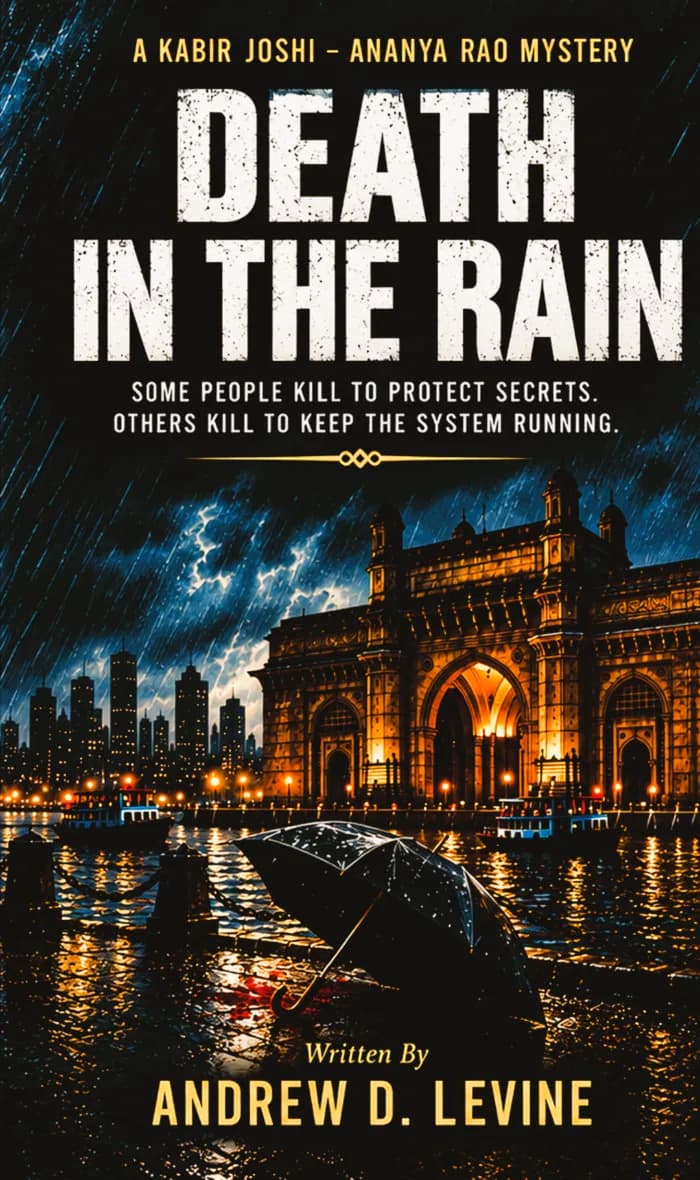
Seeing vultures so regularly brought to mind their near disappearance elsewhere—particularly in Mumbai, where they were once a critical part of the ecosystem. I had written about this collapse in my debut novel, Death in the Rain, set in Mumbai, where the disappearance of vultures—triggered by veterinary drugs in cattle—quietly upended an entire ecosystem.
The Parsi people of Mumbai left their dead at the Towers of Silence located on Malabar Hill. As they followed their Zoroastrianism faith, which treats earth, fire and water as sacred they could neither bury, cremate or immerse the bodies. Either method would pollute them. Instead they left the bodies atop the Tower, where vultures would consume them. The cleaned bones would dry and drop to the bottom where they would be collected and put into a central ossuary pit. Neat, clean, efficient, hygienic and ritually correct—for centuries, until the drug came along.
Here, by contrast, the balance still seemed intact. The vultures did their work. The river sustained life. The system held.
Before reaching Aswan, we stopped roughly forty miles north of it at the Kom Ombo Temple, sitting directly on the River, which is why most visitors there reach it by cruise.
Kom Ombo is unusual in a way that feels almost playful by Egyptian standards. It is a single temple dedicated to two gods—Sobek, the crocodile god, and Horus the Elder, the falcon god. Rather than choosing one over the other, the builders chose both.
The result is architectural duplication.
Everything is mirrored side by side: twin entrances, twin sanctuaries, parallel halls. One half belongs to Sobek, associated with fertility, protection, and the unpredictable power of the Nile itself. The other belongs to Horus the Elder, a sky god linked to kingship and order. Egyptians in the centuries before the BC era ended prayed to both, hedging their spiritual bets in a world where balance mattered more than purity. Kom Ombo’s main construction is Ptolemaic (2nd century BCE) with Roman additions. Egyptians in the late Ptolemaic and early Roman periods did in fact, pray to both.
Adjacent to the temple is a small but startling museum devoted entirely to crocodiles.
Inside, more than three hundred mummified crocodiles are displayed—fully grown, carefully preserved, and arranged with solemn purpose. These were not curiosities. They were sacred animals, honored, feared, and woven directly into religious life. Seeing them en masse drives home how differently the ancient Egyptians understood the natural world—not as something to conquer, but as something to negotiate with.
By the time we returned to the ship, Aswan lay ahead.
The river narrowed slightly. The desert pressed closer. The sense of transition was unmistakable. We were nearing the southern edge of ancient Egypt’s heartland, where the Nile begins to feel less like a corridor and more like a frontier.
Another day, another layer added.
The river, indifferent as ever, carried us on.
Day Seven — Aswan
Aswan feels different from the moment you arrive.
The river widens slightly here, slows, and seems more reflective—less a corridor and more a destination. Nubian influences surface in color, architecture, and rhythm. Life feels lighter, even as the history remains heavy.
We began the day at the Aswan High Dam, one of the most consequential engineering projects of the twentieth century. Built in the 1960s, the dam was Egypt’s response to a problem that had shaped the country since antiquity: the unpredictability of the Nile.
For thousands of years, Egypt lived at the mercy of annual floods—too much water brought destruction, too little brought famine. The High Dam changed that equation. It allowed Egypt to control flooding, generate hydroelectric power, and create Lake Nasser, one of the largest artificial lakes in the world. The scale is difficult to grasp until you stand on it. The dam contains nearly five times the material used to build the Hoover Dam.
The benefits were enormous, but the cost was real. Entire communities were displaced. Ancient monuments were threatened. Stability came at the price of permanent change.
From modern engineering, we stepped backward in time to the Unfinished Obelisk.
Lying on its side in a granite quarry, it feels less like a ruin and more like a project interrupted mid-thought. Commissioned by Hatshepsut, it was intended to be the largest obelisk ever attempted—nearly two million pounds. Had it been completed, it would have dwarfed every other example.
A crack appeared during construction, running fatally through the stone. The work stopped, leaving behind something rare: evidence not of what Egypt finished, but of how it worked. Tool marks remain visible. Measurements still readable. It is ancient engineering frozen in process.
From there, we turned toward one of archaeology’s great rescue stories.
The Temple of Philae once stood on Philae Island, but rising waters after the construction of the Aswan dams threatened to submerge it entirely. In an extraordinary international effort, the temple was dismantled stone by stone and rebuilt on nearby Agilkia Island, carefully reassembled to preserve its orientation and spirit.
Reaching Philae is part of the experience.
We sailed across the river in traditional feluccas, their triangular sails catching the breeze as they have for centuries. The water was calm. The light sharp. Approaching the temple by boat restores something essential—it arrives gradually, rising from the river rather than revealing itself all at once.
Later that evening, before returning to Philae, we spent several unhurried hours at the Old Cataract Hotel Aswan.
The hotel carries its history lightly, but it knows exactly who has passed through its doors. Guests have included Winston Churchill and Princess Diana, but its most enduring association is with Agatha Christie, who spent six months here while writing Death on the Nile.
We had traditional English high tea on the terrace. The difference this time was the view. Feluccas crossed the river below us. Boats moved slowly past. Life along the Nile unfolded at a measured pace while we sat quietly, watching and not needing to move.
Later that evening, we returned to Philae for the sound-and-light show.
Seen at night, the temple becomes something else entirely. Darkness simplifies the architecture. Light isolates columns and reliefs. Voices echo across the water. It is the same structure, but perceived differently—less analytical, more atmospheric. Familiar forms regain mystery.
After dinner back on the ship, the day ended on a note of celebration.
A Nubian entertainment group came aboard to perform traditional dances, rhythms passed down through generations. The music was infectious, the movements grounded and joyful, and before long, formality dissolved. We were invited to join in—and we did. Laughter replaced observation. Participation replaced distance.
One of the performers practiced the art of whirling, spinning continuously with remarkable control and focus. Historically, this was a form of prayer and meditation, a physical expression of spiritual devotion. Today, it survives largely as performance rather than ritual. Still, watching it up close—balanced, disciplined, and hypnotic—you could sense its origins in something deeper than entertainment.
By the time it ended, the day felt complete.
The Nile, unbothered by any of it, flowed on.
Day Eight — Abu Simbel
Day Eight began before dawn.
We were up early again—this time to catch a flight south from Aswan to see the temples of Abu Simbel Temples, nearly 180 miles beyond the city. Even by Egyptian standards, this was a commitment, but there are places you don’t negotiate with. You go when they tell you to go.
The airport itself set the tone.
The Abu Simbel Airport sits quite literally in the middle of nowhere, surrounded by desert in every direction. Its isolation feels intentional. From the moment you arrive, you are reminded—repeatedly—who is in charge. Body checks. Shoes off. Scans. Frisks. Multiple layers of scrutiny that go well beyond routine travel inconvenience. It wasn’t subtle, and it wasn’t meant to be. The message was clear: this is a sensitive place, and control matters.
Geographically, the journey mattered as much as the destination.
For much of ancient history, Aswan marked Egypt’s southern boundary. Beyond it lay Nubia—a powerful neighboring civilization with its own kings, gods, and ambitions. This was not empty land. It was contested territory, and Egypt knew it.
That context explains Abu Simbel.
The temples were commissioned by Ramesses II, built not in Egypt proper but deep in Nubia. This was not convenience; it was assertion. Ramses wanted the Nubians—and anyone else traveling the Nile—to understand exactly who held power.
Four colossal, seated statues of Ramses dominate the façade, each over sixty-five feet tall, staring outward with calculated indifference. This was architectural intimidation. Ramses was proving that he could construct one of Egypt’s most magnificent temples in a neighboring land and have it remain untouched—a permanent statement carved directly into the rock.
Inside, the message continues. Reliefs glorify Ramses’ victories, most famously at Kadesh, told with generous interpretation. Accuracy mattered less than impression. The temple functioned as propaganda at monumental scale.
What makes Abu Simbel even more extraordinary is that what you see today is not precisely where Ramses built it.
In the 1960s, the creation of Lake Nasser after the construction of the Aswan High Dam threatened to submerge the temples completely. Rather than surrender them to water, an unprecedented international effort dismantled the entire complex. It was cut into massive blocks and reassembled piece by piece on higher ground nearby.
Nothing was left to chance. The orientation was preserved. Even the precise alignment that allows sunlight to penetrate the inner sanctuary on specific days of the year was maintained. What appears immovable today was, in fact, moved—with astonishing engineering discipline.
Few sites anywhere in the world have undergone such an operation and survived so intact.
Today, Abu Simbel may be the most immediately recognizable image of ancient Egypt—four colossal figures isolated against desert and sky, stripped of context and therefore amplified. It appears endlessly in books and documentaries, a kind of visual shorthand for Egyptian grandeur.
The name itself carries a final irony.
The site is named not for Ramses, but for Abu Simbel. The site takes its name from a local boy who helped early Europeans to it, which at the time were almost entirely covered by sand. Long before tourists and flights, Abu Simbel existed only as rumor and outline.
On our return to Aswan International Airport, another reminder of modern Egypt’s priorities came into view. Parked on the tarmac was a squadron of MiG fighter jets, stationed there as a protective measure. The Aswan High Dam lies only a few miles away, and its strategic importance is impossible to overstate. These aircraft were not ceremonial. They were there to make a point.
Past and present overlap constantly in Egypt.
Ancient power is carved in stone. Modern power sits fueled and ready on a runway.
By the time we returned to the ship, the day already felt complete—and not just because of the distance traveled. Abu Simbel doesn’t simply add to what you know.
It recalibrates what you think scale, intention, and permanence actually mean.
Day Nine — Esna and the Long Way Back
Day Nine found us back on the Nile, heading north toward Luxor.
The direction still feels counterintuitive. We were traveling north, even though the map insists we were moving “up” Egypt. By now, that contradiction felt normal. The river sets its own rules, and you either accept them or spend your time resisting something that will not change.
Our primary stop that day was the Temple of Esna.
Esna is one of those places that tells two stories at once—one ancient, one modern—and the modern one currently has the upper hand. For centuries, the temple lay buried beneath sand and silt, forgotten and invisible. What has been uncovered is only a fraction of what exists.
Modern politics presses in tightly here.
Part of the temple lies beneath the local souk. Another portion extends under a mosque, recently renovated, we were told. Neither structure is going anywhere, and no one involved is eager to disturb the present in order to recover more of the past. Archaeology, here, operates under strict limits. What you see is what you get.
Even so, what remains matters.
The Temple of Esna is significant not for its size, but for its timing. It contains the last known hieroglyphic inscriptions ever recorded in Egypt—a quiet closing chapter to a written tradition that lasted more than three thousand years. Standing there, you are not just looking at carved stone; you are looking at the end of a language, the final formal echo of something that once defined an entire civilization.
Getting there, however, required effort.
To reach the temple, we had to run what can only be described as a gauntlet through the souk. Everything was for sale. Absolutely everything. The word “no” did not exist—in English, Arabic, or any other language. Vendors pressed in with smiles, persistence, and remarkable stamina. Resistance was not offensive; it was expected. You didn’t walk so much as negotiate your way forward.
Once inside the temple enclosure, the noise dropped away.
Columns rose overhead. Ceilings, recently cleaned, revealed color and detail long hidden. The contrast between the chaos outside and the stillness within was sharp and instructive. Egypt has always operated this way—layers stacked tightly, sacred and profane sharing space without apology.
By the time we returned to the ship, the day’s work felt complete.
The final day of the cruise was spent entirely on board, drifting back toward Luxor. It was, without question, the most relaxed day of the trip.
The weather cooperated perfectly—mid-seventies, clear skies, a light breeze just strong enough to remind you that the river was moving. People dozed on the rooftop deck. Others read. Some simply watched the scenery slide by: green giving way to sand, villages appearing and disappearing, life clinging tightly to the water’s edge.
There was nowhere to be.
After days of early alarms, dense history, and constant motion, the Nile finally allowed us to slow down. The river carried us without demanding attention, and for the first time since the journey began, doing nothing felt not only acceptable, but earned.
The trip had one more chapter left.
But for that day, floating quietly north, it was enough just to be there.
Day Ten — Back to Cairo
We woke up in Luxor knowing that the river portion of the journey was over.
The return to Cairo felt like a rewind rather than a new chapter—same route, same distance, just run backward. This time, though, there was none of the usual anxiety that comes with flying in this part of the world. The plane was chartered. Seats were assigned. There were no competing flights, no cancellations to worry about. Once everyone was aboard, the doors closed and we took off. Simple. Efficient. Almost elegant.
After days governed by the Nile’s rhythm, that efficiency felt slightly jarring.
When we landed in Cairo, we were met with an unexpected complication. The King of Morocco had decided to visit the city, and he wanted the entire Four Seasons Hotel Cairo at Nile Plaza for himself. As a result, we were being moved—not downgraded, just relocated—to the Four Seasons’ “spare” property, also on the Nile, about a mile away.
It turned out to be a non-event in the best possible way.
If anything, it underscored how well-organized the trip had been. Guides adjusted. Luggage reappeared. Rooms materialized. What could have been disruptive became just another story to tell. There was something faintly amusing about being displaced by royalty, and no one seemed particularly put out by it.
Before dinner, we made one final major stop.
The National Museum of Egyptian Civilization—often referred to as the Museum of Mummies—was conceived to solve a long-standing problem. Egypt’s most important royal mummies had been scattered across the country for decades, displayed unevenly and often stripped of context. Here, they were finally brought together.
In 2021, their transfer became a national event—the Pharaohs’ Golden Parade—part ceremony, part statement of ownership and respect. Today, the museum houses eighteen royal kings and four royal queens, including Ramesses II and Hatshepsut. Seeing them gathered in one place, quietly preserved and uniformly presented, felt less like sightseeing and more like a formal closing of accounts.
This was no longer about spectacle. It was about continuity.
That evening, our guides negotiated a second group dinner for us, this time on a floating restaurant on the Nile, called Zoe. The setting was relaxed, the food excellent, and the mood unmistakably different from earlier in the trip. Conversations lingered. Laughter came more easily. No one checked watches. The urgency that had defined the Nile days was gone.
Cairo felt louder than it had before the cruise, but it also felt less overwhelming. After days of temples, desert, and river silence, the city no longer competed for attention—it simply reasserted itself. We were tired, but it was the good kind of tired, the kind that comes from accumulation rather than strain.
Tomorrow would be the final, monumental day.
For now, it was enough to be back where the journey had begun, carrying far more than we had brought with us.
Day Eleven — The Pyramids
The final full day of the journey belonged to the pyramids.
Despite how they are usually portrayed, the pyramids are not isolated deep in the desert. The Giza Necropolis sits right at the edge of modern Cairo. It is the city that has grown outward over centuries, eventually pressing up against monuments that were already ancient when Rome was still a rumor.
Getting there is part of the experience.
Traffic thickens. Buildings crowd in. The air grows heavier. And then, without warning, stone breaks through the skyline—angular, impossible, and utterly indifferent to the chaos around it. There is no cinematic reveal, no clean approach. The pyramids announce themselves abruptly, as if to remind you that they have never needed permission to exist.
We did not start at Giza.
Instead, we began where Egyptian pyramid-building truly started, at the Step Pyramid of Djoser. Designed by Imhotep, it is the oldest pyramid in the world and the first monumental stone structure of its kind. Standing there, you can see experimentation at work—stacked layers reaching upward, ambition still figuring out its own vocabulary.
From Saqqara, we moved south to Bent Pyramid and then to the nearby Red Pyramid, both in the Badrashin area rather than Giza proper. These are the pyramids of trial and correction. The Bent Pyramid, changing angle halfway up, records a lesson learned in real time. The Red Pyramid corrects it—clean lines, stable geometry, confidence restored.
By the time we reached Giza, the story made sense.
The Great Pyramid of Khufu does not feel experimental. It feels inevitable. Until the nineteenth century, it was the tallest structure on Earth—roughly the height of a fifty-story building—constructed without steel, modern machinery, or scaffolding. Its scale is overwhelming, but its precision is what lingers. Nothing about it feels accidental.
Standing at its base, perspective collapses. The stones are not blocks so much as architecture masquerading as geology. You stop trying to imagine how it was built and instead accept that it was.
This is also where the camels wait.
I climbed aboard one for a thirty-minute ride with a guide. I’ve ridden horses all my life, but this was a completely different negotiation. The mounting felt like a controlled accident. Once moving, the height, sway, and rhythm never quite settle. Getting off was no less dramatic. Looking down offered no reassurance—the fall would have been far longer than from a horse. Dizzying, mildly terrifying, and unexpectedly fun all at once. Barbara documented the entire episode, and the photographic evidence survives.
From there, we moved to the Great Sphinx of Giza, the only monument we were not allowed to touch. Built in the 26th century BC during the reign of Khafre, it remains one of the oldest monumental sculptures still standing.
It is often said to bear Khafre’s likeness, though no one truly knows. The missing nose has inspired centuries of speculation—Napoleon’s soldiers, Ottoman troops—but erosion over time did most of the damage. Even so, the Sphinx remains graceful, kneeling in the sand, watching over a landscape that has changed beyond recognition.
There are always rumors about who built the pyramids.
The truth is far less mysterious—and far more impressive. These structures were planned and executed by highly skilled people. Construction took place largely during the rainy season, when farming paused and labor was available. Workers returned home during planting and harvest. With no monetary system yet in place, they were compensated with food, clothing, and household goods. Slaves may have performed some of the heaviest labor, but the intelligence required for alignment, measurement, and execution made it clear that educated specialists drove the work.
These were not accidents.
They were achievements—organized, deliberate, and deeply human.
By the time we left Giza, something shifted. The accumulation of days—river, temples, desert, stone—finally caught up. There was nothing left to add, no higher note to hit. Egypt had delivered its argument patiently, monument by monument.
From the Nile’s edge to the desert plateau, from the living city to eternal stone, the story had come full circle.
What remained was not awe alone, but respect—for the people who built all of this, and for the time it has taken to still be standing here, watching.
The Return — Doha Once More
The journey ended where it had briefly begun.
Our return took us through Doha, this time not as a stopover but as a pause—an intentional decompression before heading home. We had imagined easing into the final days by sitting poolside, basking in the sun, and letting Egypt slowly recede.
The weather had other plans.
Daytime temperatures hovered in the high 50s and 60s—pleasant for walking, but not exactly inviting for sunning oneself. The pool remained unused, more decorative than tempting. Instead, we adjusted, which by this point felt natural.
We headed to Souq Waqif for lunch and wandering. The souk is lively without being chaotic, traditional without feeling staged. Stalls spill into narrow walkways. Cafés hum quietly. Merchants sell spices, textiles, souvenirs, and things whose purpose is not always obvious.
One stop raised a familiar travel question.
At the bird market, cages were filled with live birds—some colorful, some practical-looking—and it wasn’t immediately clear whether they were destined to be pets or dinner. The ambiguity lingered, unresolved, and felt oddly appropriate. Travel often presents moments that don’t come with explanations, only observations.
From there, we walked along the Katara Cultural Village colonnade, taking in local color and photographs. The space is open and deliberate, designed for strolling rather than rushing. Art, architecture, and waterfront views blend easily. It felt like a city showing its softer side—confident enough not to impress.
The following day was Qatar National Day, and we knew much of the city would be closed. So we walked over to the Amiri Diwan, Qatar’s equivalent of a national seat of government.
There, we watched a ceremonial guard parade around the building—mounted not on horses, but on camels. It was formal, symbolic, and unmistakably local. Tradition presented not as performance for tourists, but as something lived and maintained.
Seen after Egypt, Doha felt almost surreal.
Everything worked. Streets were wide and uncongested. Buildings rose with intention rather than accumulation. The architecture felt less like ambition and more like confidence—clean lines, bold design, and a sense that the city knew exactly what it wanted to be. Traffic flowed. People were unfailingly polite. Nothing pushed back.
After days of stone, sand, and history pressing in from every direction, Doha felt like a reset.
We were no longer waking before dawn. No longer rushing to beat crowds. No longer measuring days by temples and transit times. The intensity had eased, replaced by reflection. Egypt lingered quietly now—no longer demanding attention, but refusing to fade.
It was here, in that contrast, that the trip finally settled.
Closing Reflections — Why This Trip Mattered
This journey began as a compromise.
I had asked Barbara to return to India for a second year in a row. She wanted a break—something different. Egypt, long considered off-limits for Jews and therefore more dream than plan, became the alternative. What started as negotiation turned into something far more consequential.
Egypt does that.
India and Egypt are rarely spoken of together, yet they belong in the same sentence. Both are ancient civilizations that never quite left. Both layer the sacred and the ordinary without apology. Both overwhelm at first and then, slowly, teach you how to see.
India gave me my fictional world.
Cities like Mumbai and Delhi—with their noise, contradictions, inequities, and resilience—became the backdrop for my writing life. Death in the Rain and the books that followed were born from that immersion. India taught me how chaos and order coexist, how history never really recedes, and how people live forward while carrying the past openly.
Egypt gave me perspective.
Where India is alive with motion, Egypt is alive with endurance. Its monuments do not argue or explain themselves. They simply remain. Standing in places like Karnak, Abu Simbel, and Giza recalibrates your sense of importance—not in a diminishing way, but in a clarifying one. You understand that ambition, intelligence, faith, and ego are not modern inventions. We are repeating patterns, not inventing them.
Travel, at its best, does not entertain.
It unsettles.
This trip stripped away the illusion that progress is linear, that modern life is smarter, or that permanence is guaranteed. Egypt reminds you that civilizations rise, assert themselves with confidence, and eventually become chapters rather than headlines. What survives is not power, but evidence.
As a writer, that matters.
Writing crime fiction is about motive, consequence, and time—what people think will last versus what actually does. Egypt makes that distinction unavoidable. Ramses carved his name everywhere to be remembered. Hatshepsut ruled successfully and was nearly erased. Tutankhamun mattered little in life and became immortal by accident. None of it follows intention.
Neither does writing.
Books go where they go. Readers find them—or don’t. Stories endure not because they are announced loudly, but because they resonate quietly.
This trip was a bucket-list journey, yes. But it was also something else: a reminder of why I write at all. To record. To question. To notice. To place human ambition inside a longer time frame and let it sit there honestly.
India gave me voice.
Egypt gave me scale.
Between them lies the work.
And that, finally, is what I brought home.
The end.
Comments
No comments yet. Yours can be the first.
About the author
Andrew D Levine
Andrew D. Levine writes Indian crime fiction and is the author of the Kabir Joshi & Ananya Rao Mystery Series. His novels follow investigative journalist Kabir Joshi and former police inspector Ananya Rao as they uncover murder, financial wrongdoing, institutional corruption, and the secrets hidden behind respectable facades. Set across India, the series moves from Mumbai and Delhi to Udaipur, Kolkata, Varanasi, and beyond, with each city playing an essential role in the story. A retired CPA, Levine brings a financial investigator’s eye to crime fiction, building mysteries around money trails, forged records, hidden ownership, procurement schemes, and the people who believe the paperwork will never catch up with them. He is the founder of Blue Latitude Books. His published novels include Death in the Rain, Bombay Reckless, Silent Auction Murder, and The Lily Network.
More about Andrew D LevineFollow to hear when Andrew D Levine publishes their next story or book.
Enjoyed that story?
ARC readers wanted
Tick the ARC box and we'll email you new requests from authors looking for readers, on Fridays in weeks when there are some. Each author chooses who gets a copy. You'll get the Shout-Out too: four indie books in every issue.
Books by Andrew D Levine


More stories by Andrew D Levine
You might also like
- 14 minFantasy
Work In Progress
Work In Progress
Brandon Jones
An epic saga
- 12 minLiterary
The Little Sparrow Who Learned to Share
The Little Sparrow Who Learned to Share
Riya Sharma
An inspiring journey
- 48 min

Something That Wasn't Ours
Deborah Griffin Hawke
Historical setting
- 8 min
Every Summer
David Chandler
Nature and wilderness
- 10 min

I Found a Way to Keep My Dog When My New Texas Apartment Said No Pets
David Meader
- 57 minFantasy
The Last Fortress
The Last Fortress
J. Solary