Quito, and the Galápagos: A Personal Travelogue
26 min read · 5,162 words · free · 32 views
Quito, and The Galápagos: A Personal Travelogue
Quito and the Galápagos: A Personal Travelogue
Reflections from an Extraordinary Journey
By Andrew D. Levine
Editing by Barbara Levine
Photographs by Andrew D. Levine and Barbara Levine
Blue Latitude Books
www.bluelatitudebooksonline.com
Copyright
Quito and the Galápagos: A Personal Travelogue
Reflections from an Extraordinary Journey
Copyright © 2026 by Andrew D. Levine
All rights reserved.
No part of this publication may be reproduced, stored in a retrieval system, or transmitted in any form or by any means—electronic, mechanical, photocopying, recording, or otherwise—without the prior written permission of the copyright holder, except for brief quotations used in reviews or scholarly works.
Photographs copyright © 2026 by Andrew D. Levine and Barbara Levine. All rights reserved. The photographs in this publication may not be reproduced, distributed, displayed, or transmitted without the prior written permission of the copyright holders.
Published by
Blue Latitude Books
Forest Hills, New York, USA
First Digital Edition, 2026
Disclaimer
This book is a personal travel memoir based on the author’s experiences in Ecuador and the Galápagos Islands in July 2026. The observations, opinions, and recommendations expressed are those of the author and were accurate to the best of his knowledge at the time of writing. Conditions, regulations, prices, and travel services may change.
References to specific hotels, cruise operators, airlines, restaurants, attractions, and other businesses are included solely to describe the author’s personal experiences. They should not be interpreted as endorsements or criticisms beyond those experiences.
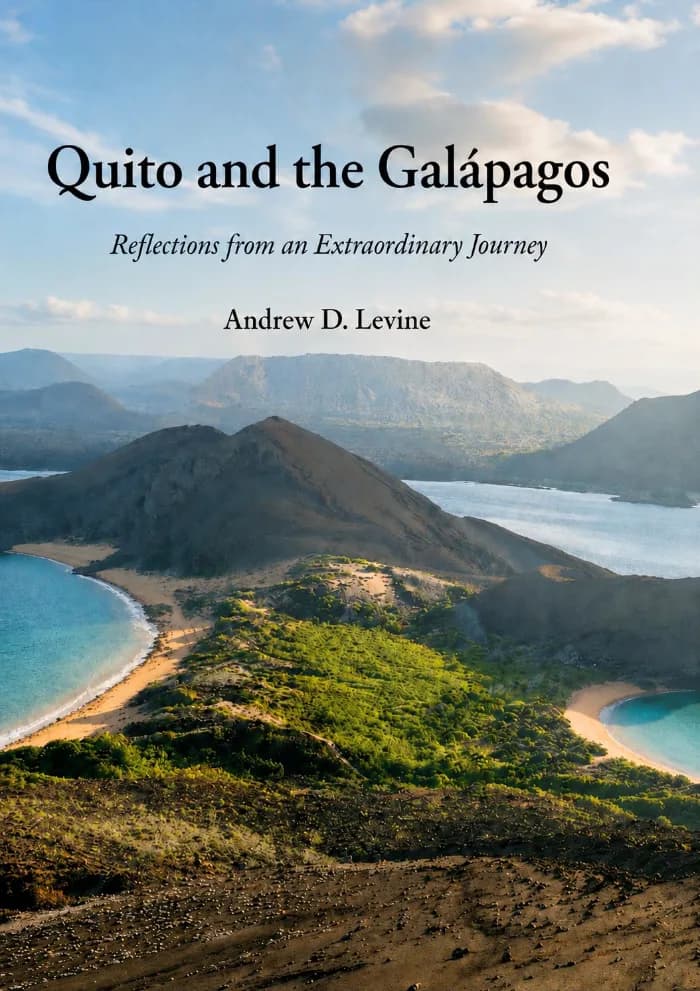
COVER PHOTOGRAPH
Bartolomé Island overlooking Pinnacle Rock and Sullivan Bay in the Galápagos Islands.
Photograph by Andrew D. Levine.
INTERIOR PHOTOGRAPHS
Unless otherwise credited, all interior photographs were taken by Andrew D. Levine or Barbara Levine.
Celebrity Flora
Our home for a week among one of the last truly wild archipelagos on Earth.
Author’s Note
Travel has always been one of life’s greatest teachers. Every journey offers new landscapes, new cultures, and new ways of seeing the world. Some trips are enjoyable. A few become unforgettable. Our journey to Ecuador and the Galápagos Islands was one of those rare experiences.
Over the years, my wife Barbara and I have been fortunate to visit many remarkable places, but few destinations have captured our imagination the way Ecuador and the Galápagos Islands did. We expected extraordinary wildlife and dramatic volcanic landscapes. What we did not expect was how deeply we would come to appreciate Ecuador itself—its history, its people, its traditions, and its quiet beauty.
This book is not intended to be a guidebook or a comprehensive history of the Galápagos. Instead, it is a personal account of our journey, told through the experiences, observations, and photographs we collected along the way. It reflects what we saw, what we learned, and, perhaps most importantly, how the journey made us feel.
The Galápagos remains one of the few places on Earth where nature still seems to operate according to its own rules. Visitors are guests there, not the other way around. That perspective became one of the most memorable lessons of our travels.
My hope is that these pages encourage you to visit Ecuador someday, to experience the Galápagos with curiosity and respect, and to discover your own unforgettable moments.
Andrew D. Levine
Forest Hills, New York
2026
Table of Contents
PART ONE - ECUADOR.. 1
Chapter 1 - The Flight South. 1
Chapter 2 – Quito. 2
Chapter 3 - The Real “Panama” Hat 5
Chapter 4 - Standing on the Equator 7
PART TWO – THE GALAPAGOS EXPEDITION... 8
Chapter 5 - Celebrity Flora. 8
Chapter 6 - A Writer Notices the Setting. 11
Chapter 7 - A Crew That Felt Like Family. 12
Chapter 8 - The Zodiacs. 13
Chapter 9 - The Islands. 16
Chapter 10 - Bartolomé and the Iconic View.. 19
Chapter 11 - Deep-Water Snorkeling. 21
Chapter 12 - Wildlife at Close Range. 22
Chapter 13 - The Giant Tortoises. 30
Chapter 14 - Rancho Primicias. 32
Chapter 15 - Lunch and Traditional Dancing. 36
Chapter 16 - Life Everywhere. 37
Chapter 17 - Back Aboard Flora. 38
Chapter 18 - What Stayed With Us. 39
Acknowledgments. 40
About the Author 41
Other Books by Andrew D. Levine. 42
List of Illustrations
Cover
Bartolomé Island overlooking Pinnacle Rock and Sullivan Bay
Frontispiece
Celebrity Flora at Sea
Ecuador
Mercado Artesanal La Mariscal, Quito
A Street in Quito's Historic Center
Authentic Sombreros de Paja Toquilla
Standing at the Equator near Quito
Celebrity Flora
Our Suite aboard Celebrity Flora
Departing on a Zodiac Expedition
Barbara and Andrew aboard a Zodiac
A Zodiac Full of Photographers
The Galápagos Islands
Flamingos at a Galápagos Lagoon
Marine Iguana on Volcanic Rock
Bartolomé Island
The Summit of Bartolomé overlooking Pinnacle Rock and Sullivan Bay
Wildlife
Blue-footed Booby
Blue-footed Booby Taking Flight
Brown Pelican on Volcanic Rocks
Pelican Resting Above the Shoreline
Sally Lightfoot Crab
Flightless Cormorant
Sea Lion Resting in the Mangroves
Giant Tortoises
Entrance to the Charles Darwin Research Station
Giant Tortoise with White Egret
Giant Tortoise in the Santa Cruz Highlands
Visitors Walking Among Free-Roaming Giant Tortoises
Rancho Primicias
Historic Giant Tortoise Shell Display
Traditional Ecuadorian Dancers and Dinner aboard Celebrity Flora with Friends
PART ONE - ECUADOR
Chapter 1 - The Flight South
Our trip to Ecuador began with Avianca, which turned out to be the least impressive part of the experience.
For years, Barbara and I had talked about visiting the Galápagos. At last, the journey had begun.
The airline may once have had the feel of a proper international carrier, but that was not what we encountered. Everything seemed pared back. The service felt impersonal, the seating was uncomfortable, and almost every small improvement came with an added charge.
We paid an extra $75 per person on each flight for seats that reclined about three inches. The regular seats did not recline at all. Calling three inches of movement an upgrade tells you nearly everything you need to know about the current state of the airline.
Like many other travelers, we also experienced the frustrations that have become common complaints: confusing communication, delays, extra fees, and a general feeling that customer service had become secondary to cost cutting. It was not the way anyone hopes to begin an international vacation. We discovered that our traveling partners from New York, Iris and Pedro, were equally unimpressed with their service and performance.
Fortunately, the flight was only a means to an end. As we descended toward Quito, the Andes began to emerge through the clouds, stretching across the horizon in every direction. Within minutes of landing, the frustrations of the journey had already begun to fade. Ecuador was waiting, and everything that followed would more than justify the trip.
Looking back now, the Avianca flights have become little more than a footnote. The memories that remain are of Ecuador's welcoming people, the remarkable landscapes, and a week exploring one of the world's most extraordinary island ecosystems.
Chapter 2 – Quito
The first thing that struck me about Quito was its setting. The city stretches along a high Andean valley at nearly 9,400 feet above sea level, surrounded by volcanic peaks that seem to watch over it from every direction. Even from our hotel window, the mountains reminded us that we were in one of the highest capital cities in the world. The thinner air was noticeable at first, encouraging us to slow our pace and simply absorb our surroundings.
Our drive from Mariscal Sucre International Airport revealed a city of contrasts. Modern office buildings gradually gave way to older neighborhoods, while steep hillsides were filled with colorful homes climbing toward the mountains. Quito felt both contemporary and deeply rooted in its past, a place where history remained woven into everyday life.
We stayed at the JW Marriott in Quito. The city has a setting that is hard to forget, surrounded by mountains and filled with churches, plazas, old buildings, and steep streets. It feels historic without feeling frozen in time. At nearly 9,400 feet above sea level, Quito is the second-highest capital city in the world.
Many visitors notice the altitude during their first day. Even a leisurely walk may leave you slightly short of breath until your body begins to adjust. Drinking plenty of water, avoiding strenuous activity, and allowing yourself time to acclimate can make your first days much more enjoyable.
After checking into the hotel, we resisted the temptation to rest. Instead, we walked through the local neighborhood by our hotel, enjoying the cool mountain air and watching local residents finish their workday. Cafés were filling, families gathered in nearby parks, and the pace of life seemed noticeably calmer than in many large cities. It was an inviting introduction to Ecuador and an excellent beginning to our adventure.
We later took a cab into town and walked through the old city, and ate at a traditional Ecuadorian dinner at a restaurant named Achiote. We had time to relax and enjoy a locally brewed beer; cappuccino beer was one of the choices. The owners and their lovely daughter, dressed in chef’s white jacket, explained each dish to us in her excellent English. We then headed back to the hotel to sleep and prepare for the next day of sightseeing in Quito.
At Quito’s Mercado Artesanal La Mariscal.
A busy street in Quito’s historic center.
Chapter 3 - The Real “Panama” Hat
While in Quito, I bought a real “Panama hat,” although the name is misleading. The hat is Ecuadorian and is properly called a sombrero de paja toquilla. It is made from toquilla straw and woven by hand.
There are cheap imitations for around $10, but a genuine hat can cost hundreds of dollars or more than $1,000. The difference comes down to the fineness of the weave, the skill of the maker and the amount of time spent on it. Some of the best examples take months to complete. The hat may be known around the world as a Panama hat, but its true home is Ecuador.
Walking into the shop, Sombrero Lopez, I immediately noticed that no two hats were exactly alike. Although they all shared the same classic shape, subtle differences in color, weave, brim width, and crown style reflected the craftsmanship of the individual artisans who had created them. This was clearly not a factory product. Each hat represented hours of careful hand weaving using fibers from the paja toquilla palm.
Like many visitors, I had always assumed a Panama hat originated in Panama. Learning that it was actually an Ecuadorian creation added another layer to the experience. The name survives because these hats were shipped through Panama during the construction of the Panama Canal, where they became famous among travelers and workers. Standing in Quito, wearing a genuine sombrero de paja toquilla, I appreciated how history sometimes gives the wrong place credit for the right invention.
Of all the souvenirs available in Ecuador, this was the one I knew would travel home with me. Long after photographs are filed away, a well-made hat can become part of everyday life. Every time I wear it, it will remind me not only of Ecuador but of the people whose craftsmanship has preserved a tradition recognized around the world.
Did You Know? The Panama Hat is Ecuadorian
Despite its name, the Panama hat originated in Ecuador.
Authentic hats are hand woven from the fibers of the paja toquilla plant (Carludovica palmata). The finest examples may require several months to complete, with the quality determined largely by the fineness and consistency of the weave.
The hats became internationally famous after being exported through Panama during construction of the Panama Canal, and the misleading name has remained ever since.
In 2012, UNESCO recognized the traditional weaving of Ecuadorian toquilla straw hats as an Intangible Cultural Heritage of Humanity.
Inside a Quito shop devoted to authentic sombreros de paja toquilla.
Chapter 4 - Standing on the Equator
We also visited the equatorial area outside Quito. Standing at latitude zero was one of those simple travel moments that becomes more memorable than expected: one foot in each hemisphere, with the Andes spread around us.
At latitude zero near Quito and the Galápagos – Andrew & Barbara
PART TWO – THE GALAPAGOS EXPEDITION
A Week Aboard Celebrity Flora
Chapter 5 - Celebrity Flora
From Quito, Barbara and I flew to the island of Baltra in the Galápagos and took a Zodiac to board the Celebrity Flora, which was anchored just off the coast.
Boarding Celebrity Flora felt less like checking into a cruise ship and more like joining a small scientific expedition. With fewer than one hundred guests aboard, the atmosphere was relaxed and personal from the moment we stepped on deck. Crew members greeted us warmly, escorted us to our suite, and quickly made us feel at home.
The Flora is not a conventional cruise ship, and that was one of its great strengths. It carries only 100 passengers in 50 suites, so the ship never felt crowded. There were only a few teenagers on board, and the atmosphere remained quiet and relaxed.
With so few people, passengers quickly began recognizing one another. The same was true of the crew. By the middle of the trip, the ship felt less like a floating hotel and more like a small community moving from island to island.
Before departure, everyone gathered for an orientation led by the expedition team. Safety procedures, Zodiac operations, and the strict environmental regulations that protect the Galápagos were explained in detail. It was immediately clear that this would not be a typical cruise. Every landing, hike, and snorkeling excursion would be carefully planned to minimize our impact on one of the world's most fragile ecosystems.
As the ship quietly left Baltra at sunset, passengers lined the outdoor decks with cameras in hand. Conversations grew quieter as Ecuador slowly disappeared behind us. Ahead lay islands that many of us had dreamed about visiting for years. There was a shared sense that the real adventure was finally beginning.
Suite aboard Celebrity Flora.
Departing the ship by Zodiac for another expedition.
Chapter 6 - A Writer Notices the Setting
The ship design immediately caught my attention as a writer. I write India-set mystery novels in the Kabir Joshi & Ananya Rao series, where cities like Mumbai, Delhi, Udaipur, and Kolkata become as important to the story as the characters themselves. The Galápagos presented an entirely different kind of setting, but one that was equally compelling.
A small expedition ship. Just one hundred passengers in 50 suites. Remote volcanic islands separated by miles of open ocean. Carefully scheduled excursions. A close-knit crew of 95 who quickly come to know every guest. It was impossible not to imagine how such an environment might shape a mystery.
Unlike a large cruise ship carrying several thousand passengers, there is nowhere to disappear aboard Celebrity Flora. Everyone eventually notices everyone else. Every Zodiac landing is organized. Every excursion has a guide. Every passenger returns to the same ship each evening. Those very qualities make the Galápagos feel wonderfully secure as a traveler—and wonderfully intriguing as a novelist.
Fortunately for my fellow passengers, I left my notebook closed for most of the voyage and simply enjoyed the experience. But I would be less than honest if I did not admit that, every now and then, I found myself wondering how Kabir Joshi and Ananya Rao might investigate a murder in a place where the islands themselves seem determined to preserve every secret.
Perhaps one day, after my current series is complete, the Galápagos will become the setting for a very different mystery.
Chapter 7 - A Crew That Felt Like Family
The crew was another reason the Flora stood apart from other Celebrity ships.
Most large cruise ships bring together crew members from many countries and many backgrounds. The Flora felt more local. Almost the entire crew was Ecuadorian, including people from the Galápagos and others who had spent much of their lives working there.
They knew the islands, understood the wildlife, and spoke about the region with genuine pride. They also seemed to know one another in a way that went beyond working on the same ship. They lived and worked together like a family, and that showed in the way they treated the guests.
Their graciousness and attentiveness were exceptional. They anticipated what people needed, explained things clearly and handled every excursion with calm efficiency. We have sailed with Celebrity before, but this crew was different.
Chapter 8 - The Zodiacs
The Zodiacs are designed specifically for Galápagos conditions. They were stable, easy to board, and easy to leave, even when we were landing near rocks or beaches. Their open layout made photography surprisingly simple, which mattered because there was always something worth photographing.
At first glance, the Zodiacs looked deceptively simple. In practice, they became the essential link between Celebrity Flora and the islands. Boarding required coordination, steady footing, and a helping hand from the crew, who made the process appear effortless. Whether approaching a rocky shoreline or gliding into a quiet mangrove, the Zodiac drivers demonstrated remarkable precision and an intimate knowledge of local tides and currents.
Our first wet landing was memorable. As the Zodiac eased toward the beach, we swung our legs over the side into ankle-deep water before walking directly onto the sand. Within moments we were surrounded by sea lions, marine iguanas, and birds that paid little attention to our presence. It became obvious that we were visitors entering their world, not the other way around.
Exploring the Islands by Zodiac.
A Zodiac full of photographers, with a pelican unconcerned by the attention.
Chapter 9 - The Islands
Our itinerary took us through a wide range of landscapes.
On Rábida Island, the beach was deep red, colored by the iron in the volcanic soil. The contrast between the red sand, blue water and dark rock was striking. Sea lions rested along the shore, pelicans moved overhead, and flamingos could be seen near the lagoon.
At Egas Port on Santiago Island, we walked through a rough coastal landscape shaped by lava, wind, and water. Marine iguanas blended into the black rock, sea lions rested near the shore, and seabirds moved in and out of the tidal areas.
At Sullivan Bay, also on Santiago, the landscape looked almost newly formed. We crossed hardened lava that still showed the ripples and folds created when it cooled. It was one of the best places to understand how young and volcanic the islands really are.
Islands Born of Fire
The Galápagos Islands were created by volcanic eruptions over millions of years as the Nazca tectonic plate slowly moved across a stationary hotspot beneath the Pacific Ocean.
The western islands remain volcanically active and are among the youngest islands in the archipelago. The eastern islands are much older and have been shaped by erosion over time.
Walking across the lava at Sullivan Bay is one of the best places to appreciate how recently some of this landscape was created.
On Isabela Island, we traveled through Elizabeth Bay by Zodiac. The water was calm and bordered by mangroves. We saw sea turtles, rays, marine birds, and Galápagos penguins moving through the sheltered water.
At Tagus Cove, the scenery was steeper and more dramatic, with volcanic walls rising above the sea. Isabela feels raw and unfinished, as though the forces that created it are still close to the surface.
On Santa Cruz Island, we visited Las Bachas, a pale beach used by nesting sea turtles. Behind the beach was a lagoon where flamingos and other birds gathered.
We also spent time in Puerto Ayora, the largest town in the Galápagos. After several days of beaches, lava fields, and remote coves, it was interesting to see the inhabited side of the islands: shops, restaurants, boats, fishermen and local people living alongside the wildlife.
Flamingos at a quiet Galápagos lagoon.
A marine iguana stretched out on the sand.
Chapter 10 - Bartolomé and the Iconic View
One of the most memorable days was our visit to Bartolomé Island.
To reach the viewpoint, we climbed 372 steps over volcanic rock. It was not an easy climb, but the view from the top justified every step. Below us were Pinnacle Rock, Sullivan Bay, dark lava fields, and the surrounding sea.
The iconic view from the summit of Bartolomé.
It is one of the most recognizable views in the Galápagos. Bartolomé and Pinnacle Rock also appeared in the film Master and Commander: The Far Side of the World, starring Russell Crowe.
Bartolomé's Famous View
The panorama from the summit of Bartolomé Island is one of the most photographed scenes in the Galápagos. Looking down on Pinnacle Rock, Sullivan Bay, and the surrounding volcanic landscape, visitors gain an appreciation for both the beauty and the geological forces that shaped the archipelago.
The climb follows approximately 372 wooden steps over volcanic terrain, but almost everyone agrees that the view from the summit makes the effort worthwhile.
Chapter 11 - Deep-Water Snorkeling
Where conditions and park rules allowed, we also went deep-water snorkeling.
That gave us a completely different view of the islands. On land, the Galápagos feels dry, volcanic, and exposed. Underwater, it becomes fluid and crowded with life.
Swimming together, Barbara and I saw sea turtles swimming beneath and beside us, along with sharks, rays, schools of fish, and sea lions moving through the water with effortless speed. The sea lions were especially playful and often seemed more curious about us than we were about them.
The water itself was remarkably clear, allowing us to see much farther than we expected. Sunlight filtered through the surface, illuminating schools of colorful fish as they moved together in perfect synchrony. Every few moments, something new appeared—a turtle gliding silently below us, a ray disappearing into the sandy bottom, or a sea lion darting effortlessly through the water before circling back for another look.
Unlike snorkeling on a tropical coral reef, the Galápagos offered something different. This was not about brilliant coral formations or warm turquoise lagoons. It was about witnessing a thriving marine ecosystem shaped by powerful ocean currents that bring together species found nowhere else on Earth. The experience felt less like visiting an aquarium and more like briefly becoming part of the natural world beneath the surface.
When we climbed back into the Zodiac after each excursion, the conversations were remarkably similar. Everyone had seen something different, and everyone was smiling. It was impossible not to appreciate how much of the Galápagos exists below the waterline, hidden from those who never venture into the sea.
Although I have been fortunate to scuba dive in many parts of the world, snorkeling in the Galápagos provided some of the closest wildlife encounters I have ever experienced.
Chapter 12 - Wildlife at Close Range
The wildlife on land was just as remarkable.
Nothing truly prepares you for the wildlife of the Galápagos. The animals are not tame, yet they show remarkably little fear of people. Years of careful conservation have allowed them to live largely undisturbed, creating encounters that feel almost surreal. Blue-footed boobies continued their courtship displays only a few feet away, sea lions stretched lazily across beaches without concern for passing visitors, and marine iguanas remained motionless on sun-warmed lava as we quietly walked past.
Equally memorable was the silence. Away from the occasional call of a seabird or the distant sound of surf, many locations were surprisingly quiet. That stillness heightened every experience, making each encounter feel more intimate and more respectful than any wildlife viewing I had experienced elsewhere.
We saw blue-footed boobies, their feet almost unnaturally bright, standing beside the trails and moving through their courtship displays. We also saw red-footed boobies, often perched in trees.
Frigatebirds circled overhead, and the males displayed their large red throat pouches. Pelicans skimmed the water and dove for fish. Flamingos stood in shallow lagoons, moving slowly through the pink and gray reflections.
Why Are the Animals So Fearless?
One of the most remarkable features of the Galápagos is how little fear many animals show toward people.
For thousands of years, many of these species evolved without large land predators. As a result, they never developed the instinctive fear that wildlife displays in many other parts of the world.
Strict conservation rules now help preserve that natural behavior by requiring visitors to maintain respectful distances and avoid disturbing the animals.
A blue-footed booby posed on black lava.
A blue-footed booby lifting off from the water.
A brown pelican among the volcanic rocks.
A pelican resting above the shoreline.
A brilliant Sally Lightfoot crab.
A flightless cormorant on the lava shore.
A sea lion resting in the mangroves.
Chapter 13 - The Giant Tortoises
Then there were the giant tortoises.
They moved through the highlands at a pace entirely their own. Some were so large and old that they seemed almost prehistoric. Watching them made time feel slower.
We also learned about the conservation work being done to rebuild the tortoise population. At breeding centers, eggs and hatchlings are protected from predators and other threats. The young tortoises are raised until they are large enough to have a better chance of surviving after release. They are then returned to their islands and placed back into the wild.
The effort is not only about saving individual tortoises. They help shape the land by opening paths, spreading seeds, and affecting the vegetation. Restoring tortoise populations to their original islands helps restore the ecology of the islands.
Saving a Symbol of the Galápagos
During the nineteenth and early twentieth centuries, giant tortoise populations declined dramatically because of hunting and the introduction of invasive species such as rats, pigs, and goats.
Today, breeding centers throughout the Galápagos protect eggs and hatchlings until they are large enough to survive in the wild. Thousands of young tortoises have been successfully returned to their native islands, helping restore both the species and the fragile ecosystems that depend upon them.
Entrance to the Charles Darwin Research Station.
Chapter 14 - Rancho Primicias
Later, we visited Rancho Primicias in the Santa Cruz highlands and had lunch there.
The ranch had a large natural area where giant tortoises were free to move, feed, rest and simply exist. It was not a zoo and did not feel like one. The tortoises were wild and went wherever they chose.
Some sat in the grass or mud. Others moved slowly across the property, barely acknowledging the people watching them. Nothing was staged, and that was exactly what made it memorable.
A giant tortoise sharing the grass with a white egret.
A close encounter in the Santa Cruz highlands.
Visitors walking among free-roaming giant tortoises.
Rancho Primicias, with giant tortoise shells on display.
Chapter 15 - Lunch and Traditional Dancing
After lunch, we were treated to a performance of traditional local dancing. It brought a human side to the day and reminded us that the Galápagos is not only about wildlife and geology. It is also home to people with their own music, customs, and traditions.
Traditional dancers performing after lunch at the ranch.
Chapter 16 - Life Everywhere
Sea lions were everywhere.
Around the waterfront communities we visited, sea lions appeared along the beaches, in the water, and near the boats. They slept on the sand and gathered around the waterfront, treating the area as their own—which, of course, it was.
Marine iguanas lay across the black lava, so well camouflaged that it was easy to miss them at first. Everywhere we went, the same truth became clear: the animals were not there for our benefit. We were temporary visitors in their world.
Chapter 17 - Back Aboard Flora
At the end of each day, we returned to the Flora.
The food was abundant and had a strong Ecuadorian and Galápagos character. There was fresh seafood, local produce, regional dishes, and flavors that matched where we were rather than ignoring it.
We would eat, review photographs, compare experiences and listen to the naturalists explain what we had seen and what we might see next.
The ship, the crew, the excursions, and the food all felt connected to the islands. Nothing seemed imported merely for effect.
Dinner aboard Celebrity Flora with New Friends.
Chapter 18 - What Stayed With Us
What stayed with us most was not one animal, one island or one view.
It was the feeling of being somewhere that still operates according to its own natural rules.
The Galápagos does not feel arranged for visitors. It feels as though it is allowing visitors to pass through.
From Quito and my sombrero de paja toquilla to the red beach of Rábida, the lava fields of Santiago, the coves of Isabela, the beaches of Santa Cruz, and the climb to the top of Bartolomé, this was a trip Barbara and I will remember for the rest of our lives.
The Avianca flights felt like something to endure.
Everything after them was worth it.
Acknowledgments
No memorable journey is ever experienced alone.
My deepest thanks go to my wife, Barbara, whose companionship, photography, editing, patience, and enthusiasm made every day of this journey richer than it could ever have been otherwise. This book is as much a reflection of our shared experiences as it is of my own observations.
I would also like to thank the captain, officers, crew, expedition leaders, and naturalists aboard Celebrity Flora. Their professionalism, knowledge, warmth, and genuine love for the Galápagos transformed an exceptional itinerary into an unforgettable experience.
My appreciation extends to the people of Ecuador, whose hospitality and pride in their country welcomed us from the moment we arrived in Quito until the day we returned home.
Finally, I would like to acknowledge the scientists, conservationists, park rangers, researchers, and volunteers whose dedication continues to preserve the extraordinary ecosystems of the Galápagos Islands. Because of their efforts, future generations will have the opportunity to experience these remarkable islands much as we did.
About the Author
Andrew D. Levine is an author, Certified Public Accountant, and lifelong traveler whose passion for exploring the world has inspired both his fiction and nonfiction writing.
He is the creator of the Kabir Joshi & Ananya Rao Mystery Series, contemporary India-set crime novels that combine financial investigation, journalism, and police procedure with richly detailed settings throughout India. His fiction explores the intersection of money, power, corruption, and justice while introducing readers to the history, culture, and daily life of one of the world's most fascinating countries.
When he is not writing, Andrew enjoys traveling with his wife, Barbara, photographing wildlife, learning about local cultures, and discovering the stories that make every destination unique.
He lives in Forest Hills, New York.
Other Books by Andrew D. Levine
The Kabir Joshi & Ananya Rao Mystery Series
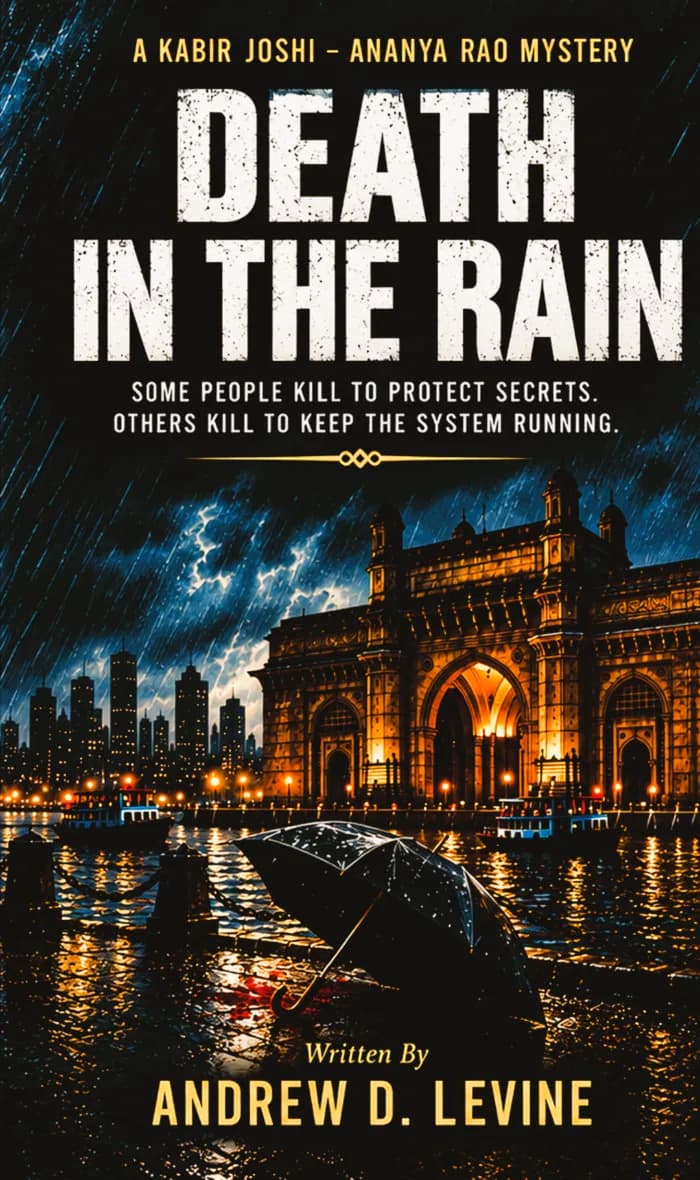
Death in the Rain
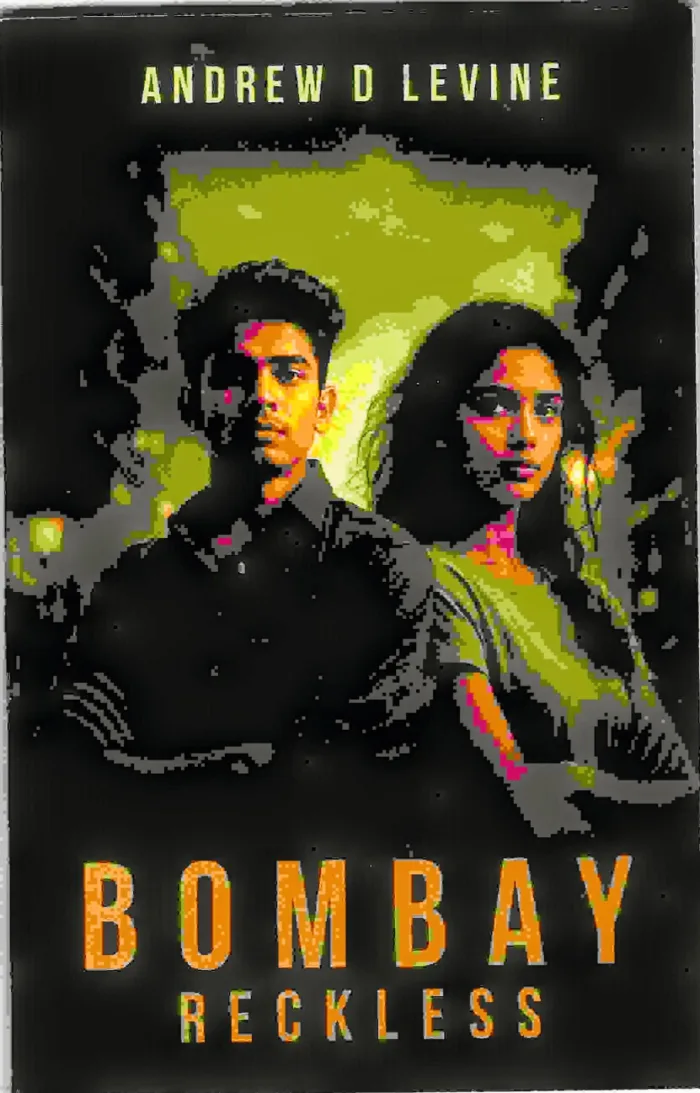
Bombay Reckless
Silent Auction Murder
The Lily Network
Forthcoming:
The Udaipur Conspiracy
The Hooghly File
For additional information, travel updates, and future releases, visit:
www.bluelatitudebooksonline.com
The end.
Comments
No comments yet. Yours can be the first.
About the author
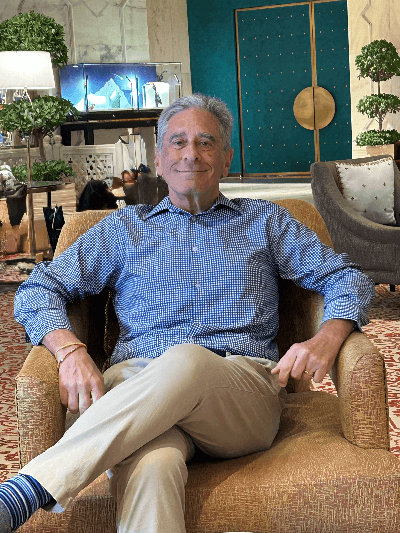
Andrew D Levine
Andrew D. Levine writes Indian crime fiction and is the author of the Kabir Joshi & Ananya Rao Mystery Series. His novels follow investigative journalist Kabir Joshi and former police inspector Ananya Rao as they uncover murder, financial wrongdoing, institutional corruption, and the secrets hidden behind respectable facades. Set across India, the series moves from Mumbai and Delhi to Udaipur, Kolkata, Varanasi, and beyond, with each city playing an essential role in the story. A retired CPA, Levine brings a financial investigator’s eye to crime fiction, building mysteries around money trails, forged records, hidden ownership, procurement schemes, and the people who believe the paperwork will never catch up with them. He is the founder of Blue Latitude Books. His published novels include Death in the Rain, Bombay Reckless, Silent Auction Murder, and The Lily Network.
More about Andrew D LevineFollow to hear when Andrew D Levine publishes their next story or book.
Enjoyed that story?
ARC readers wanted
Tick the ARC box and we'll email you new requests from authors looking for readers, on Fridays in weeks when there are some. Each author chooses who gets a copy. You'll get the Shout-Out too: four indie books in every issue.
Books by Andrew D Levine


More stories by Andrew D Levine
You might also like
- 12 minLiterary
The Little Sparrow Who Learned to Share
The Little Sparrow Who Learned to Share
Riya Sharma
An inspiring journey
- 14 minFantasy
Work In Progress
Work In Progress
Brandon Jones
Epic quest
- 10 min

I Found a Way to Keep My Dog When My New Texas Apartment Said No Pets
David Meader
A true story
- 31 min
One Does Not Stand Alone
Deborah Griffin Hawke
Nature and wilderness
- 8 min

Every Summer
David Chandler
Nature and wilderness
- 57 minFantasy
The Last Fortress
The Last Fortress
J. Solary