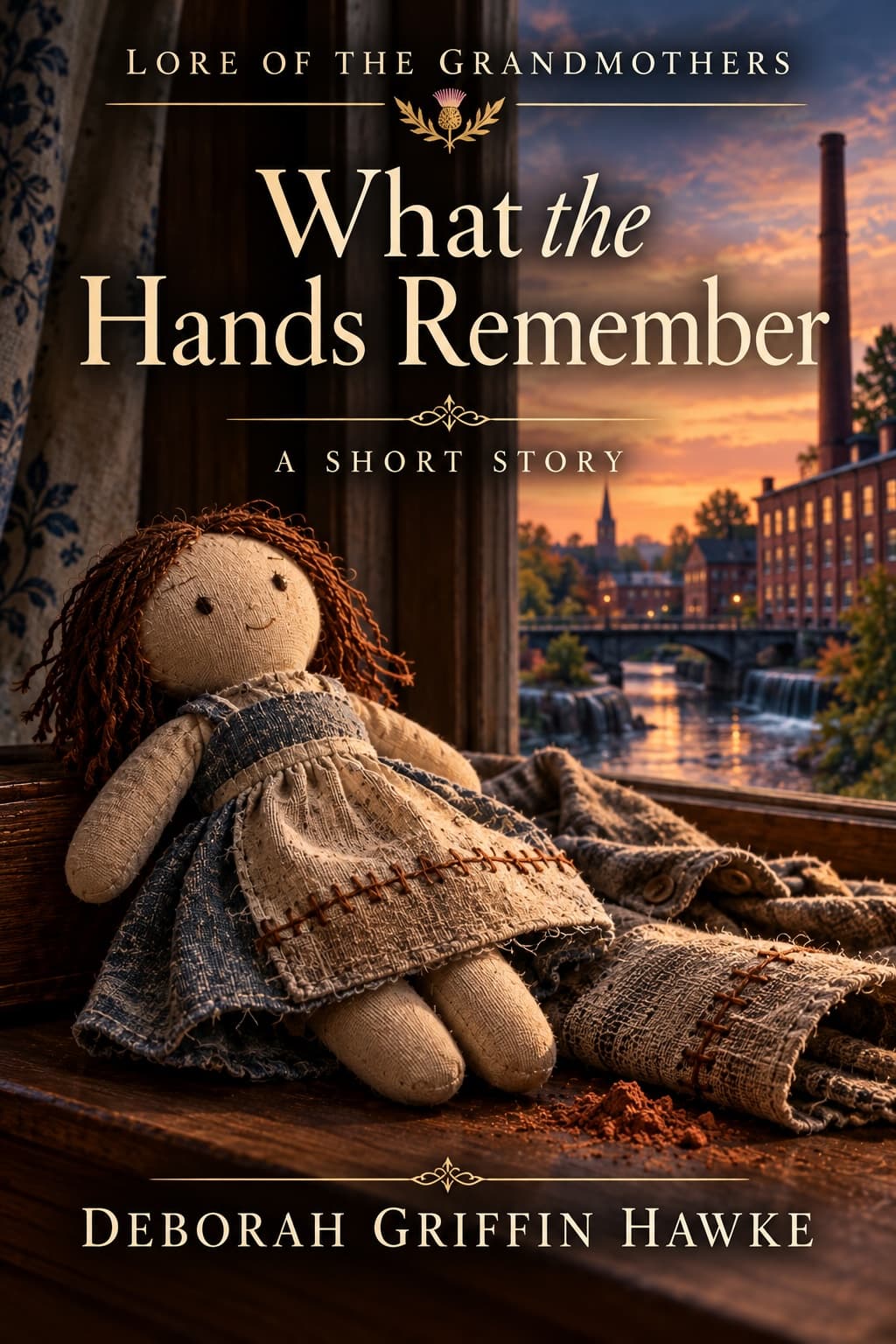
What The Hands Remember
46 min read · 9,162 words · free · 3 views
What the Hands Remember
By the autumn of 1862, Sarah Lattimore had learned that silence could have weight. For most of the twenty-three years she had lived within walking distance of Lowell, the mills had supplied a kind of weather of their own. The bells began before daylight, summoning thousands of workers from boardinghouses and rented rooms, and after that came the steady vibration of machinery, carried through brick walls and across the canals until it seemed to settle into the bones. Sarah had never worked a loom herself, but both her sons had found places in the mills, and now Samuel’s wife, Mary, worked there as well. She had grown so accustomed to the sound that she noticed it only when visitors complained of the racket. Now, with cotton difficult to obtain almost from the moment the Southern ports were blockaded and some of the mills stopped altogether, she had begun to understand how much of Lowell she had always heard without listening.
Others ran only when there was material enough to make running worthwhile. Workers who had once complained about long hours watched the gates for notices telling them whether there would be any hours at all, and Sarah could tell something of the prospects for the week simply by stepping outside in the morning and listening.
There was a thin frost along the edge of the kitchen garden that morning, enough to silver the cabbage leaves and stiffen the last weeds Sarah had neglected to pull. Beyond the roofs and chimneys, smoke rose from some of the mills but not all of them. The Merrimack moved where it always had, indifferent to cotton, war, and the men in Washington who apparently believed the country could be torn in half without interfering with anyone else’s breakfast. Sarah tucked her shawl more securely around her shoulders and went back inside.
Mary was at the table with a cup of tea between her hands, looking guilty. “You’re still here.”
“I am.”
“Good.”
“I thought you’d say that.”
“I generally do when I mean it.”
Mary smiled despite herself. At twenty-four she still had the smooth, narrow face Sarah remembered from the first time Samuel had brought her home, though pregnancy had softened it during the last few months. She had reached the stage at which chairs had become adversaries. Sitting required consideration, standing required leverage, and anything dropped on the floor was likely to remain there until somebody else came along.
“The mill is running today,” Mary said.
“It ran yesterday.”
“And I worked yesterday.”
“You did.”
Mary gave her a look over the rim of the cup. “Are you planning to continue agreeing with me until I leave?”
“I thought I might.”
Sarah went to the stove and lifted the lid from the pot of oatmeal. She had added the last of the dried apples, which struck her as extravagant until she remembered Mary was eating for two and Samuel had been complaining that his wife had developed an unreasonable dislike of eggs. Sarah considered an unreasonable dislike of eggs preferable to the vomiting that had occupied much of June.
Samuel came in through the back door before either woman could continue the argument, bringing cold air with him and stamping damp earth from his boots onto the floor Sarah had swept less than an hour before. Sarah looked at the boots and then at him. Samuel looked down.
“I’ll sweep it.”
“Yes.”
He bent to kiss Mary on the top of her head before reaching for the bread. He was thirty, broad through the shoulders like his father had been, although the resemblance stopped there. Samuel possessed a cheerfulness Sarah regarded as both a virtue and evidence that the boy had not paid sufficient attention to life.
“They may shut us down again next week,” he said. “Davis heard there’s hardly enough cotton for three days after this lot.”
Mary’s expression changed. “Three?”
“That’s what he heard.”
“Davis hears something every day.”
“Eventually one of the things he hears has to be true.”
Sarah put the oatmeal on the table. “An interesting theory. I wouldn’t build the household finances around it.”
The war had done peculiar things to Lowell. Men had left to fight, although not as many millworkers as outsiders seemed to imagine; factories could not simply empty themselves because the newspapers wanted soldiers. Women had taken on more work in some places and lost it in others. Prices climbed while wages did not. Cotton disappeared. Wool mattered more. Every church seemed to have a committee collecting something, and nearly every parlor contained women sewing for men they had never met. Sarah had joined them because she had no talent for speeches and even less patience for committees, but she could cut cloth accurately and sew a seam that would survive hard washing.
During the previous winter she had made shirts until she dreamed of sleeves: flannel shirts, cotton shirts when cotton could be spared, drawers, pillowcases, whatever the women organizing the relief work said was needed. Some went into boxes with lint and bandages, preserves, soap and letters addressed simply to A Massachusetts Soldier, as though the Commonwealth had produced a single enormous young man with several thousand arms. She had sometimes wondered who received the things she made, though not sentimentally. Sarah had never required gratitude from a stranger for doing something useful. But hands left evidence in their work: a crooked seam, a tightened stitch, the faint shine where a thumb had repeatedly pressed cloth against a needle. She could recognize her own sewing months after she had forgotten making it.
Mary pushed her chair back and braced one hand against the table. Samuel was beside her immediately.
“What?”
“I am standing up.”
“You made a noise.”
“I make noises now.”
Sarah hid her smile by turning toward the stove. Samuel had been watching his wife with mounting alarm since her belly first became unmistakable, as though pregnancy were an obscure illness that might become fatal if he failed to observe it closely enough.
Mary finally got to her feet. “Your mother thinks I should stay home.”
“My mother thinks everyone should stay home.”
“I think,” Sarah said, “that a woman who has to lean sideways to put on her shoes might survive one morning without tending a loom.”
Mary rested both hands on the great round curve beneath her apron. “And if they close next week?”
None of them had an answer for that. Somewhere beyond the houses, a mill bell began to ring, followed by another farther away. There had once been so many that the separate bells disappeared into one another, part of the enormous mechanical voice of Lowell that Sarah had scarcely noticed until it began to fade. This morning she could count them. Mary did not go to the mill.
Sarah did not mistake that for victory. Mary had merely decided, after Samuel left for work and after considerable rearrangement of her clothing, that her back hurt enough to make standing at a loom for the better part of the day seem foolish. She announced the decision as though Sarah had played no part in it, which Sarah accepted as the price of getting what she wanted.
There was plenty to occupy them at home. The garden was nearly finished for the year, but onions still needed sorting, two pumpkins had developed soft places that would have to be cut away before the rot spread, and a basket of mending had been waiting beside Sarah's chair for most of the week. Mary settled herself near the window with one of Samuel's work shirts across her lap while Sarah pared the pumpkins at the kitchen table.
For a while they worked without talking. Sarah liked silence when it was chosen. There was companionship in the small sounds of another person occupied nearby: scissors opening and closing, thread drawn through cloth, the scrape of a knife against the cutting board. Outside, a wagon passed along the road, its wheels making a brief complaint over the ruts before the sound diminished. From the direction of the city came the bells they had heard at breakfast and, after them, the uneven beginning of machinery. One mill started, then another, each announcing itself separately before the noise gathered into something closer to the Lowell Sarah remembered.
Mary stopped sewing and listened. "It sounds almost normal."
"Almost."
"You don't have to say it that way."
"What way?"
"As though normal is something we've misplaced and aren't likely to find again."
Sarah glanced up from the pumpkin. "I said one word."
"You managed quite a lot with it."
That made Sarah laugh. Mary had been part of the family for only three years, but she had learned quickly that Sarah's silences were not empty and that ignoring them did not make them less opinionated. Sarah liked her for that, among other things.
The knock at the back door came shortly before noon. It was not a neighbor's knock; neighbors generally opened the door while knocking and began talking before they were entirely inside. Sarah wiped her hands on her apron and found Mrs. Abigail Mercer on the step, holding a folded paper in one gloved hand and wearing the expression of a woman who had organized something. Sarah knew the expression well.
"Abigail."
"Sarah. I hoped I'd find you home."
"You usually do."
Mrs. Mercer chose to take this as an invitation and stepped inside. She was a compact woman in her fifties whose bonnet always seemed tied more tightly than comfort required. Sarah had worked beside her through most of the previous winter, when the relief committee had occupied two afternoons of every week and occasionally a third whenever someone received word that a regiment required socks, shirts, blankets, bandages, or quantities of food no Massachusetts kitchen could reasonably be expected to produce. Mary greeted her and made an attempt to rise.
"For heaven's sake, don't," Abigail said. "I've had three children. I remember the last month."
"So does everyone keep telling me."
"That's because everyone who's survived it considers herself an authority."
Sarah returned to the table. "What do you need?"
Abigail looked offended. "I came to see how you were."
"You brought a list."
The folded paper remained plainly visible in her hand. Abigail looked at it, then at Sarah, and surrendered. "There are two crates at the church rooms that need sorting. They came up yesterday with some hospital stores and soldiers' effects. Mostly clothing. Reverend Pierce wants anything usable cleaned and put aside before someone decides to throw the whole lot away."
"Whose effects?"
"That's part of the difficulty. Some are marked, some aren't. There are papers with the shipment, but no one seems able to make them agree with what's actually in the crates."
Sarah put down her knife. "Where did they come from?"
"Boston."
"Before Boston."
Abigail unfolded the paper, though apparently the answer was not written there. "New York, I believe. And before that, farther south. There were sick men sent north, hospital transfers, things collected after men were moved. I couldn't make sense of half of it. Mrs. Proctor says some came from Virginia and some from North Carolina." Mary had resumed sewing, but Sarah saw her glance up.
"North Carolina is a considerable distance from Virginia when you're sorting laundry," Sarah said.
"Which is why I'm asking for help instead of pretending I understand it."
That, more than the crates, persuaded her. Sarah had always found Abigail easier to tolerate when she admitted the limits of her authority.
"I can come after dinner."
"I knew you would."
"No, you hoped I would. There's a difference."
Abigail smiled, folded her list again and tucked it into her reticule. "One o'clock, then."
After she left, Sarah returned to the pumpkin. Mary watched her for several moments before lowering her eyes to Samuel's shirt.
"You want to know what's in those crates."
"I want to keep usable clothing from being thrown away."
"Of course."
"Cloth costs money."
"I didn't say anything."
"You didn't have to."
Mary's needle went through the fabric, and the corner of her mouth moved. Sarah decided not to dignify that with an answer.
The church rooms smelled of dust, lamp oil and old wool. Someone had pushed two long tables together beneath the windows, and the crates sat on the floor nearby, their lids already pried loose. Three other women had arrived before Sarah, and coats, trousers, underclothes and blankets were beginning to form separate piles across the tables. Much of it was stained. Some pieces had been cut, presumably by hospital attendants trying to get clothing off injured men, while others bore the hard evidence of long wear: shiny elbows, torn cuffs, missing buttons, seams pulled almost to failure. Sarah took off her bonnet and coat, rolled her sleeves back, and began where there was room.
The work required little conversation. Anything beyond repair went into one pile, anything that might be washed and reused into another. Pockets had to be checked before garments were handled further. They found two letters, a broken comb, several buttons, a small Testament with no name written inside it, and a spoon that Abigail insisted someone must have stolen from a hospital. Sarah had reached nearly to the bottom of the first crate when she pulled out a flannel shirt.
She held it by the shoulders and shook it once to unfold it. The garment was dirty but sound except for a repaired tear near one cuff, where someone had used a darker thread than Sarah would have chosen. Her hands stopped.
She turned the shirt over and looked at the inside seam beneath the left arm. The stitches there were small, regular, and angled very slightly upward toward the back. Sarah knew those stitches. She had made them.
Sarah did not immediately call Abigail over. She lowered the shirt onto the table and spread it flat, smoothing the flannel with both hands until she could see the construction clearly. The cloth had faded unevenly, darker beneath the arms and along the back where sweat had repeatedly soaked into it, and the collar had been reinforced with stitches that were not hers. Whoever had worn it had worn it hard.
The seam beneath the left arm settled the question. Sarah had made dozens of shirts that winter, most of them from the same patterns, but she had a habit of changing the angle of her stitches when she approached the joining seam at the back. Her mother had taught her to do it when Sarah was a girl, claiming it kept the cloth from pulling where a man's shoulders put the greatest strain on it. Sarah had never tested the theory. The seam held, which was evidence enough for her, and after more than thirty years of sewing she no longer thought about the slight turn her needle made. Seeing it now was rather like recognizing her own handwriting.
"Something wrong with that one?" Abigail asked from the other end of the table.
"I made it."
Abigail came closer, wiping dust from her fingers onto a rag. "You're certain?"
Sarah showed her the seam and immediately regretted doing so, since Abigail stared at it with the polite concentration of someone being shown the distinguishing characteristics of two apparently identical chickens.
"That tells you?"
"It tells me."
"Then one of ours has come home."
Sarah looked again at the shirt. "The shirt has. We don't know anything about the man."
There was no name inside the collar, although Sarah remembered that some of the women had wanted names sewn into the clothing and others had pointed out, sensibly, that they did not know who would receive any particular garment. She searched the pockets and found them empty, then examined the hem in case something had been written or stitched there later. Nothing identified the wearer, and the papers Abigail had brought contained no inventory detailed enough to connect one flannel shirt with one soldier.
The repair at the cuff interested her more. Someone had closed a three-cornered tear with dark brown thread, making no attempt to match the original stitching. The work was competent but unfamiliar, with several tiny reinforcing stitches where the tear had threatened to spread. Sarah ran her thumb across them and felt the slight ridges of thread beneath the pad of her finger.
"Not yours?" Abigail asked.
"No."
"Hospital repair, perhaps."
"Perhaps."
She left it at that, although she doubted it. A hospital attendant repairing clothing for reuse would have done what was necessary quickly, and this had been done by someone unwilling to let the tear open again. The distinction was small enough that Sarah could not have defended it to anyone who did not sew. She simply knew the difference between a repair intended to last until tomorrow and one intended to last as long as the cloth did. When she turned back the cuff, a small shower of dried earth fell onto the table.
Abigail brushed at it automatically. "Good Lord, these things are filthy."
"Wait."
Sarah caught her wrist before the rag swept across the rest of it. More earth had collected inside the folded edge of the cuff, protected there through whatever handling had brought the shirt north. It was not the dark, damp soil Sarah had been scraping from Samuel's boots all autumn. This was finer and paler, with a rusty cast that became more apparent when she loosened a little with the point of a pin.
Abigail leaned nearer. "Mud."
"Yes, Abigail. I recognize the general category."
"I thought perhaps you'd discovered gold."
"If I do, you may have half."
"Only half?"
"You didn't make the shirt."
Abigail returned to her sorting, muttering something about generosity, while Sarah worked the compacted earth from beneath the cuff. She could not have said why she bothered. A soldier's clothing accumulating dirt was hardly remarkable, and a garment that had traveled through camps, hospitals, wagons, ships and warehouses could have acquired it almost anywhere. Still, the earth had been caught beneath the same cuff someone had carefully repaired, and Sarah found herself reluctant to brush it onto the floor. She tipped what she had loosened into her palm.
The sensation was so slight at first that she mistook it for the grit moving against her skin. Then the ring on her right hand became warm. Sarah's fingers closed.
She had worn the ring for most of her adult life and knew its moods better than she knew those of some people. It had warmed in the presence of certain plants, vibrated faintly when she stood too near a place where the Veil had thinned, and once grown hot enough to make her pull her hand away from a locked chest her grandmother had expressly told her not to open. Sarah had opened it anyway, which was how she had learned that magical warnings and common sense were often the same lesson delivered by different means.
This warmth was different. It did not increase or urge her toward anything. It seemed to settle into her hand, spreading from the ring across her knuckles and down into her palm until she could no longer tell whether the heat came from the metal or from her own skin. She opened her fingers carefully.
The reddish earth lay where it had been before. Sarah touched it with the thumb of her other hand, rubbing one dry fragment against another until it broke apart. Her left arm shifted against her body.
Sarah looked down, startled less by the movement than by the certainty accompanying it. Her elbow had moved outward and her hip had turned slightly beneath it, making room for a weight that wasn't there. For one bewildering instant her body knew precisely how that weight should feel: warm against her side, heavier than expected, one small leg pressing across the front of her skirt.
She straightened abruptly, and the sensation vanished before she could decide what it had been. Around her the room remained exactly as it was. Abigail was arguing with Mrs. Proctor about whether a pair of trousers could be salvaged, someone near the stove had begun coughing from the dust, and outside a wagon rattled past the church windows.
Sarah looked down at her empty arm, then at the earth still resting in her palm. She had never held a child that way. Samuel had preferred her shoulder when he was small, and his brother Daniel had squirmed so relentlessly that she had usually carried him facing outward with both arms around his middle. Whatever her body had remembered a moment ago, it was not one of Sarah Lattimore's memories.
She folded the cuff back over the remaining earth and laid the shirt carefully aside rather than adding it to either pile. There were still half a crate of garments waiting to be sorted, and Sarah had lived long enough to know that an inexplicable thing rarely improved because one stared at it in public. She continued working, although from time to time her left hand drifted toward her hip, as if some part of her had not yet noticed that the child was gone.
arah took the shirt home wrapped in brown paper, after assuring Abigail twice that she was not stealing from the relief committee. Abigail pointed out that no one had claimed ownership of the garment in the first place, which made Sarah's defense unnecessary, but she nevertheless wrote one flannel shirt—S. Lattimore at the bottom of her list with the solemnity of a quartermaster accounting for government property.
By the time Sarah reached home, the afternoon had warmed enough to soften the frost remaining in shaded places, and the road had begun to give beneath her shoes. She noticed the earth because she had spent the walk trying not to think about the earth in the shirt. The soil along the road was familiar in all its autumn variations: black where leaves had decayed into it, sandy near the worn edge of the lane, almost greasy where wagon wheels had churned it repeatedly after rain. She had handled dirt all her life without experiencing anyone else's child against her hip.
Mary had moved from the kitchen to the small sitting room, where the afternoon light was better, and was unpicking the hem of one of her dresses. She had apparently decided that staying home from the mill did not obligate her to rest. A folded length of fabric lay beside her, intended to widen the dress enough to accommodate the last weeks of pregnancy, and a scattering of dark threads clung to her apron.
"Did you rescue the Commonwealth from its old trousers?" she asked as Sarah came in.
"Several pairs. Massachusetts may continue."
"I'll tell Samuel."
Sarah put the parcel on the table and removed her bonnet. She had intended to carry the shirt upstairs before Mary noticed it, although she wasn't entirely certain why. The experience at the church rooms had been strange, but strangeness was not something Sarah routinely concealed from her family. Samuel and Daniel had grown up knowing there were subjects their mother treated differently from other people, objects they were not to handle without permission and a black-covered book they had been taught from childhood never to open. Neither had inherited what Sarah's grandmother called the knowing, but neither regarded its existence as particularly remarkable. Children accepted the world they were given; it was only later that they began sorting its contents into possible and impossible. Mary, however, had married into that world.
"What did you bring home?"
"A shirt."
"I can see that."
Sarah looked at her. "Then why did you ask?"
"Because you carried it in as though it contained a severed head."
That was sufficiently like something Samuel might have said that Sarah wondered whether marriage caused people to exchange irritating habits. She untied the string and opened the paper, explaining where the crates had come from and how she had recognized her own sewing. Mary abandoned the dress and came to the table, interested first in the practical improbability of a shirt returning to the woman who had made it.
"Do you know who wore it?"
"No. There was nothing with it."
"Could Samuel know him?"
"If every Massachusetts soldier knew Samuel, I imagine he would have mentioned it."
Mary ignored that and examined the shirt, turning the collar and looking inside it for a mark Sarah might have missed. When she reached the repaired cuff, Sarah stopped her before she shook it loose.
"There's dirt inside."
Mary waited. Sarah could see the question forming before she asked it.
"And?"
"The ring warmed when I touched it."
That changed Mary's expression. She glanced at Sarah's right hand and then back at the cuff. Although Sarah had explained the ring to her after the wedding, Mary had never seen it do anything more remarkable than remain on her mother-in-law's finger. Sarah had told her about the grimoire as well, because keeping such things secret from a woman who might someday give birth to the next granddaughter struck her as both unkind and impractical. The mirror had required a longer explanation, largely because Sarah herself understood less about it than she would have liked.
"What happened?" Sarah told her.
Mary listened without interrupting, one hand resting absently on her belly. When Sarah described the sensation of carrying a child against her left hip, Mary's hand moved lower, following a slow shift beneath her dress.
"Perhaps you were thinking about this one."
"I wasn't."
"You've been thinking about little else for six months."
"That doesn't make another person's way of carrying a child appear in my arm."
Mary considered that without looking offended. She had the useful habit of taking Sarah seriously without accepting everything Sarah said simply because magic was involved.
"How do you know it belonged to someone else?"
"I don't know what belonged to whom. I know what I felt."
Sarah opened the cuff over the table. Several crumbs of the reddish material dropped onto the wood, but most remained pressed into the fold and around the darker stitches. In daylight it looked less like ordinary road dirt than it had at the church. The color was warmer, almost orange where it had dried most completely, and the finer particles adhered stubbornly to the fibers.
Mary touched one with the tip of her finger. Nothing happened.
"Again," Sarah said.
Mary pressed her finger more firmly against the clay, then rubbed it between finger and thumb. "Dirt."
"Apparently it has standards."
Mary laughed and wiped her fingers on a scrap of thread. Sarah tried it herself, expecting that whatever had occurred in the church rooms would not repeat simply because she demanded it. The ring warmed almost at once, gently enough that she might have missed it if she had not been waiting. This time she did not pull away.
The first sensation was pressure across the pad of her thumb, followed by a minute resistance along the side of her forefinger. Sarah stared at her hand while her fingers curved around something narrow and familiar to muscles that had never held it. Not a needle. The grip was wrong for that. Her thumb pushed downward while the first two fingers turned, released, turned again, and she felt a rough surface passing beneath them in quick succession. Then came a smell so immediate that Sarah glanced toward the stove. Corn.
Not boiled corn or the dried kernels she stored for winter, but warm meal, faintly sweet and dusty, accompanied by the remembered scrape of something heavy against wood. Her right shoulder began a slow circular motion. Sarah knew perfectly well that she was standing in her own kitchen with nothing in her hand, yet somewhere inside the movement was the certainty of having performed it hundreds of times.
Mary had gone very still. "What are you doing?"
"I don't know."
"Your hand looks as though you're turning something."
"I know."
Sarah let go of the clay, and the movement stopped. The smell disappeared with it, leaving only pumpkin, woodsmoke and the faint sourness of yesterday's bread sponge in the kitchen. She flexed her fingers several times, unsettled by how thoroughly the unfamiliar action had inhabited them.
Mary reached for the clay again, but Sarah caught her hand before she touched it. "Don't."
"It didn't do anything before."
"That doesn't mean it won't."
Mary withdrew her hand, and Sarah folded the cuff closed. For several minutes neither woman spoke while Sarah considered what she knew and, more importantly, what she did not. The ring had responded to the clay twice. The sensations had been too coherent to dismiss as imagination, yet nothing in them resembled the warnings or recognitions she had been taught to expect from it. Her grandmother had never described borrowing another person's bodily memory, and Sarah could recall nothing in the grimoire that came close.
That last uncertainty was one she could remedy. She carried the shirt upstairs to the bedroom and knelt beside the cedar chest at the foot of her bed, where ordinary linens covered the less ordinary things beneath them. The grimoire rested inside its wrapping of faded green wool, its dark leather binding softened by generations of hands. Beside it lay the scrying mirror, face covered, and a small empty wooden box that had once held the ring Sarah now wore.
Mary had followed as far as the doorway. Sarah saw her looking at the three things together and realized that, although Mary knew about them individually, she had probably never seen the inheritance assembled in one place. Sarah lifted the grimoire onto the bed and began looking for something that would explain what a handful of North Carolina earth had remembered.
The grimoire did not yield its knowledge in any order Sarah had ever been able to discern. One of her grandmothers had attempted an index, filling six pages with cramped references to remedies, plants, workings, warnings and observations before apparently abandoning the enterprise. Sarah sympathized. The book had been added to for centuries by women who had written down what they considered worth preserving, usually without considering the inconvenience this might cause descendants looking for something specific three hundred years later. She sat against the headboard with the book open across her knees while Mary remained in the doorway, watching.
“You may come in. Pregnancy isn’t contagious.”
“I know that.”
“You’ve been standing there as though there’s a line on the floor.”
Mary entered and sat carefully on the edge of the bed. “You said I wasn’t supposed to touch it.”
“I said you weren’t supposed to open it without me. That was three years ago, and you had just married my son. I hardly knew you.”
“You knew me for two years before I married him.”
“I knew you as the woman Samuel intended to marry. That is not the same thing as knowing you as the woman who had married him.”
Mary considered this and apparently decided there was no profitable argument to be made from it. She leaned nearer as Sarah turned several pages, though she kept her hands folded over her belly.
The oldest writing was difficult to read, not merely because the ink had faded but because the language itself shifted the farther back Sarah went. Later women had occasionally added notes beside older entries, translating a word or identifying a plant by another name, and there were places where three different hands had carried on a conversation separated by generations. Sarah had always liked those pages best. They made the dead women less solemn. One of them had contradicted an earlier remedy so emphatically that she had underlined do not drink this twice and added that her grandmother had possessed a strong constitution and very little sense.
Sarah searched first for earth, then clay, then memory, although the grimoire had no headings that made such distinctions reliable. She found instructions for drawing fever from the body with cool soil wrapped in linen, an account of a place where nothing planted would grow despite fertile ground, and several pages concerning burial earth that she read carefully before dismissing them. None described a living person's movements passing through dirt into the body of a stranger.
“What are you looking for?” Mary asked.
“Anything that tells me this has happened before.”
“And if it hasn’t?”
“Then I would prefer to know that too.”
Mary shifted beside her, trying to ease her back without announcing that it hurt. Sarah noticed and said nothing. They continued through several more pages before Mary reached across Sarah to point at a passage near the bottom of one leaf.
“That says touch.”
“It says do not touch.”
“Oh.”
“An important distinction.”
“What happens if you do?”
Sarah read the rest of the entry. “Blisters.” Mary returned her hands to her belly.
They searched until the light had begun to change at the windows and Sarah's eyes ached from deciphering old ink. Nothing in the grimoire explained the shirt. More troubling, nothing came close. Sarah had expected to find some obscure entry she had forgotten or a sentence written by a grandmother whose experience had been similar enough to give her a place to begin. The absence did not mean the thing was impossible. It meant only that none of the women who had written in the book had thought to record it. Or none of them had encountered it.
Sarah closed the grimoire and rested her palms on the worn leather cover. “My grandmother used to say the book contained everything the women before us had learned that was worth passing on.”
“That sounds useful.”
“She also said that anyone who believed it contained everything worth knowing was a fool.”
Mary smiled. “I think I would have liked her.”
“She would have made you nervous.”
“You make me nervous.”
“Then you probably would have liked her.”
Sarah wrapped the book again and returned it to the chest. Before closing the lid, she hesitated over the covered mirror. It was older than anything else she owned except the ring, its dark surface unlike ordinary glass even when nothing unusual appeared within it. The mirror had been made to look through the Veil, and for that reason alone it seemed a possible way to learn more about whatever clung to the shirt. She left it where it was.
The clay had not shown her anything. It had given her the knowledge of a body, and Sarah saw no reason to force one kind of magic through an object meant for another merely because both were mysterious. Her grandmother had also been very clear about the dangers of using a tool simply because it happened to be available.
Downstairs, Sarah folded the shirt and put it into the bottom drawer of the kitchen press, where Samuel was unlikely to mistake it for something he could wear. She intended to return to it when the house was quiet and she had decided what question she was actually asking, but the evening gave her little opportunity. Samuel came home hungry and dirty, bringing the news that another section of the mill would probably close before the end of the week. Daniel arrived not long afterward, having heard from Samuel that Mary had stayed home and apparently interpreting this as evidence that a birth might occur at any moment. Mary regarded the two brothers with growing irritation while they discussed her condition across the supper table.
“I am sitting here,” she finally said.
Daniel grinned. “We know.”
“You keep talking about me as though I've gone upstairs to give birth.” Samuel glanced toward the ceiling, and Mary stared at him until he realized what he'd done.
Sarah ate her stew and allowed herself to enjoy the spectacle. Daniel was twenty-seven and unmarried, a fact he attributed to insufficient income and Sarah attributed to his habit of becoming interested in women who had already decided he was an idiot. He resembled her more than Samuel did, with the same dark hair and tendency to narrow his eyes when thinking, but whatever part of Sarah's inheritance could recognize the Veil had passed him by as completely as it had his brother. That had once frightened her more than she admitted.
When the boys were small, Sarah had watched them for signs. She had put the ring into each child's palm when he was old enough to understand that he must not swallow it, later feeling ridiculous for having expected anything to happen. Neither boy noticed things other children did not notice. Neither woke from dreams knowing something that proved true the next day. Neither heard the faint vibration Sarah sometimes felt in particular places or reacted to the grimoire except with the ordinary curiosity produced by being forbidden to touch it.
Her mother had warned her this might happen. The line did not pass from mother to daughter but from grandmother to granddaughter, and Sarah's sons were not a failure in the pattern. They were the bridge across which it traveled.
The knowledge had comforted her when they were young. It had become less comforting as they grew older and produced no daughters.
Now Samuel's wife sat across from her with both hands supporting the underside of her belly while Daniel suggested names solely because he knew Mary disliked them. Somewhere beneath Mary's hands was either the granddaughter Sarah had waited for without admitting how badly she wanted her, or another beloved child who would leave the ring, grimoire and mirror waiting for a generation still to come. Sarah had no way to know which.
Upstairs, the old shirt lay folded in darkness with reddish clay caught beneath its mended cuff, carrying the memory of a woman Sarah had never met. For the first time it occurred to her that perhaps the grimoire had failed to answer because she had been asking the wrong women.
The thought stayed with Sarah after the others had gone to bed. She had been taught to think of the grimoire as a record of experience rather than scripture, yet experience accumulated over centuries acquired an authority of its own. When something happened that Sarah could not explain, she looked backward. Somewhere among those pages, she expected another woman to have stood where she was standing and left instructions.
She waited until the house was quiet before taking the shirt from the kitchen press. The fire had settled into a red glow beneath the ash, and she lit the lamp on the table rather than stir it up again. Samuel and Mary were asleep in the room they used when they stayed with her, though Sarah doubted Mary was sleeping well. Late pregnancy seemed to require her to choose between breathing comfortably and finding a position her back would tolerate, and the floorboards overhead had complained several times since Sarah came downstairs.
She unfolded the shirt beneath the lamp and studied the repaired cuff. The brown thread was heavier than Sarah's, the stitches tightening where the cloth had frayed most badly. Turning the cuff inside out, she found a knot tucked beneath the seam so neatly that she had missed it earlier. Those stitches had been made by the same hands that might have carried the child Sarah's body had remembered and performed the repetitive work she had felt in her fingers that afternoon.
The clay remained pressed into the fold. Sarah loosened only a little and placed it in the center of her palm, keeping her other hand flat on the table until the ring began to warm. She had decided that this time she would not search for meaning while the sensation was happening. She would pay attention to the body first and ask questions afterward.
Her thumb moved almost immediately. The same pressure returned along her first two fingers, followed by the turning motion she had experienced upstairs. Sarah let it continue. Her wrist knew the angle; her shoulder settled into a slow rhythm, and after several repetitions she understood that whatever tool the other woman had used required both downward pressure and rotation. The smell of cornmeal came again, but now there was something else beneath it, a dry woody scent and the sharper smell of smoke from a fire that burned differently from Sarah's stove.
Another sensation entered before she had finished examining the first. Heat lay across the back of her neck and shoulders, not the contained heat of a kitchen but sunlight strong enough to make fabric cling between her shoulder blades. Her feet felt bare.
Sarah looked down involuntarily at her stockings and shoes. The borrowed body did not care what Sarah was wearing. Its feet knew packed earth, warm and slightly uneven, with a shallow depression near the heel of the left foot where the ground had been worn by repeated standing.
The movement of her hand stopped. Her fingers opened, then closed around something broader than the imagined handle they had held before, and her thumb dragged across a surface with a slight nap. Cloth. Sarah knew cloth well enough that the recognition came before thought. Her fingers pinched it, turned an edge inward and held it there.
A needle pressed against the side of a finger. Not Sarah's finger, exactly, although she felt the pressure in her own flesh. The hand pushed the needle through resistant fabric, drew it out, pulled thread after it and returned for another stitch. There was irritation in the movement, not anger but impatience with cloth that refused to stay where it had been put. Sarah knew that irritation intimately.
Small fingers rested against the woman's wrist. A child's fingers, warm and slightly sticky, interfering with the work. The woman's hand paused. Instead of brushing them away, it turned and enclosed them for a moment before returning to the seam.
The kitchen came back slowly, although nothing in it had changed. The lamp flame bent slightly in a draft from the window. The old clock on the mantel continued its dry little ticking, and overhead one of the floorboards creaked as someone turned in bed. Sarah's hand rested on the table beside the shirt. She looked at the repaired cuff and knew, with a certainty she could not justify to anyone else, that she had just felt it being mended.
The discovery should have answered something. Instead it made the problem larger. Dirt could not sew, and cloth could not remember the hand that repaired it. If the ring were simply drawing impressions from the shirt, Sarah might have understood the experience as some property of the garment she had never encountered before. But the first memory had come from the clay before she touched the repair, and the strange turning movement had nothing to do with the shirt at all.
The possibility unsettled Sarah more than the borrowed sensations had. Her family had never believed itself alone in possessing unusual knowledge; the grimoire mentioned healers, cunning women and midwives whose practices sometimes overlapped with their own. But Sarah had thought of them as individuals who knew certain things, not as other lines of women preserving knowledge grandmother to granddaughter, with rules and practices as deliberate as hers. One of those women might have repaired the shirt.
Sarah touched the dark stitches without disturbing the clay. This time the ring remained cool.
The following morning she carried it to the church rooms before breakfast was entirely settled in her stomach. Abigail had not yet arrived, but Reverend Pierce was there attempting to move one of the empty crates by himself. Sarah waited until he had proved to his satisfaction that the crate was heavier than expected before helping him drag it against the wall.
"I need to see the papers that came with these."
He straightened, breathing harder than the effort warranted. "Mrs. Mercer has them."
"All of them?"
"I believe so. There was a shipping paper attached to one crate and a packet inside the other. Why?"
Sarah had prepared an answer during the walk and discarded it because it required too much lying. "I found something in one of the garments that may tell me where it came from."
"What sort of something?"
"Dirt."
Reverend Pierce looked at her for several seconds. "I see."
"No, you don't."
"No."
"But you know me well enough not to ask the next question."
That, at least, he accepted. He had buried Sarah's husband and baptized both her sons, and years earlier he had learned that Sarah occasionally asked peculiar questions for reasons she preferred not to explain. Whatever conclusions he had drawn, he had had the courtesy to keep them to himself.
Abigail arrived twenty minutes later with the papers in her reticule. Most were useless to Sarah: receipts, quantities, names of organizations and destinations through which the crates had passed. Boston appeared twice, New York once, and several entries were abbreviated so severely that Sarah could not tell whether they referred to people or places. Near the bottom of one sheet, however, someone had written a list of effects gathered with men transferred north from a hospital in New Bern, North Carolina. Sarah read the name twice.
"Is that what you were looking for?" Abigail asked.
"I didn't know what I was looking for."
"That sounds inconvenient."
"It usually is."
Abigail leaned over her shoulder. "New Bern. Burnside took it in the spring, didn't he?"
"I believe so."
"My sister's boy wrote about it. Or perhaps that was somewhere else. Every letter contains the name of a place I have never heard of and an assurance that he's eating well, which means my sister assumes he isn't."
Sarah barely heard her. She had seen maps of the coast in newspapers, enough to know that New Bern lay far south of anything familiar to her. She tried to imagine the distance between that North Carolina town and the kitchen where she had stood the previous night, feeling another woman's bare feet on warm earth. The distance mattered less than it should have.
Someone in New Bern had held this shirt, repairing it carefully while a child leaned against her wrist. Somehow the earth caught beneath that cuff had carried the physical memory of those hands all the way to Massachusetts, and the distance between the two women suddenly mattered less than it should have.
Sarah folded the paper and handed it back to Abigail, already thinking of the grimoire waiting upstairs and of all the women whose handwriting filled its pages. For the first time in her life, five hundred years of inherited knowledge seemed not vast but local.
The repaired cuff eventually gave Sarah the closest thing to an answer. One evening she sat beside the kitchen fire with the shirt across her lap and let her thumb rest against the darker stitches. The warmth of the ring spread slowly through her hand until the room receded, not disappearing but becoming less important than the body her own had begun to remember.
The woman was washing the shirt.
Sarah felt cold water around hands that were not hers and the drag of wet flannel beneath them. One cuff had torn badly enough that two fingers slipped through it. There was annoyance at that, followed by the practical certainty that the shirt could not be returned in such condition. The memory shifted: dry cloth lay across the woman's lap while she pushed a needle through the resistant flannel, a child's fingers occasionally interfering with the work. Beneath the familiar motions Sarah felt something she had not recognized before, neither thought nor emotion but a knowing that made the ring pulse once against her finger. The woman understood what the earth could carry. The other woman knew.
Sarah's own hands became still. She had assumed the clay had accidentally preserved the woman's touch, but there was nothing accidental about the certainty moving through her now. The woman who repaired the shirt knew the earth beneath her feet in some manner Sarah did not, knew that touch remained after the hand was gone, and had handled clay and cloth with that knowledge.
Sarah did not know what the woman called what lay beyond ordinary perception. Perhaps she had no word for the Veil, or perhaps she had another. She might never have seen a grimoire, worn a ring, or looked into a black mirror made by hands no longer entirely human. None of that mattered. Somewhere in North Carolina was another line of women whose grandmothers had taught them something Sarah's grandmothers had not.
Then she thought of the hundreds of pages upstairs, each containing only what one woman had managed to learn in one lifetime, and understood the mistake. The grimoire had never claimed to contain the world. Sarah had asked it to.
A later packet of hospital records gave her one more piece. Thomas Hale of Massachusetts had been separated from his unit by illness near New Bern and, according to a notation in a clerk's cramped hand, had spent part of his recovery in the household of Rebecca Ballinger before returning to duty. Sarah could not prove Thomas had worn her shirt, but the dates fit. More important to her was the name. Rebecca Ballinger. At last the hands in the clay belonged to someone.
Winter settled over Lowell. The mills continued their uncertain rhythm, working when materials allowed and falling quiet when they did not. Mary's pregnancy advanced until even she admitted that the walk to the mill had become absurd, and Samuel's vigilance increased accordingly. Sarah endured both of them, worked with the relief committee, tended her household, and occasionally took the old flannel shirt from the press.
By then Sarah had decided the shirt would never be worn again. The collar was frayed and the body badly stained, but there was still sound cloth in it, and she had never understood people who confused sentiment with usefulness. Mary found her at the kitchen table with pieces of flannel spread around her and stopped short. "After all that, you're making rags?"
Mary found her at the kitchen table with pieces of flannel spread around her and stopped short. "After all that, you're making rags?"
"I have rags."
"What are you making?"
Mary stared at it for a moment before recognizing the narrow body and two outstretched arms. "A doll?"
"Unless I've badly miscalculated."
That made Mary laugh, and Sarah returned to cutting. She used clean portions of the shirt for the body and stuffed it with wool saved from an old cushion. The face required more consideration. She embroidered the eyes and mouth because buttons seemed foolish on something intended for a baby, although Mary pointed out that the baby had not yet arrived and might be a boy.
"Boys are permitted dolls," Sarah said.
"I'll tell Samuel."
"Samuel survived having a mother. He'll survive a doll."
For the dress Sarah chose another piece of cloth, but when she came to the bodice she stopped. The repaired cuff lay among the remnants, still bearing Rebecca Ballinger's dark brown stitches. Sarah had written in the grimoire only what she knew: that earth could retain the physical memory of hands, that another tradition existed beyond their own, and that ignorance should not be mistaken for absence. The cuff was too worn to use whole, so she cut around the repair and worked the sound portion into the doll's little flannel dress, leaving Rebecca's stitches visible.
The cuff was too worn to use whole. Sarah cut around the repair and worked the sound portion into the doll's little flannel dress, leaving the brown stitches visible.
The child arrived before dawn several weeks later after a long night during which Samuel proved almost entirely useless. Sarah sent him for water several times simply to give him something to do, and Mary swore at him once with such invention that Sarah had to turn away to conceal her approval. When the cry finally came, sharp and furious in the small bedroom, Sarah was too tired to think about anything except Mary. Only after she had made certain her daughter-in-law was safe and warm beneath the blankets did she look properly at the child. Samuel stood beside the bed with tears on his face and no apparent awareness of them. "A girl," Mary whispered, and Sarah closed her eyes briefly.
When the cry finally came, sharp and furious in the small bedroom, Sarah was too tired to think about anything except Mary. Only after she had made certain the bleeding was controlled, the linens changed and her daughter-in-law warm beneath the blankets did she allow herself to look properly at the child.
"A girl," Mary whispered.
She had imagined this moment often enough to distrust everything she felt about it. Relief came first, embarrassingly strong, followed immediately by guilt for having cared whether a healthy child was male or female. She put both aside. There would be time later to examine the foolishness of grandmothers.
When Mary was ready, Sarah took the baby. Her granddaughter was smaller than anticipation had made her, warm and astonishingly solid, with damp dark hair flattened against her head and one cheek reddened from the effort of arriving. Sarah supported the tiny head in the bend of her arm and looked down at a face that resembled no one yet. The ring remained quiet, and Sarah was glad. This was Mary's child before she was anyone's heir, and she deserved at least a few hours in the world before five hundred years of women began making demands upon her.
Sarah was glad. This was Mary's child before she was anyone's heir, and she deserved at least a few hours in the world before five hundred years of women began making demands upon her.
Several days later, when Mary was downstairs again and Samuel had stopped hovering closely enough to make everyone homicidal, Sarah brought out the doll. She had finished the dress while mother and baby slept, adding nothing elaborate because elaborate things rarely survived children. Mary settled the baby against her knees while Sarah placed the doll beside her. The child's eyes wandered without focus until one arm escaped the blanket and moved with the peculiar purposeless determination of the very young. Her hand found the doll, tiny fingers sliding across the flannel dress until they closed directly over Rebecca Ballinger's dark brown stitches. Sarah felt the ring grow warm against her finger.
Mary settled the baby against her knees while Sarah placed the doll beside her. The child showed no interest at first. Her eyes wandered without focus, her mouth working at some private concern, until one arm escaped the blanket and moved with the peculiar purposeless determination of the very young.
Sarah felt the ring grow warm against her finger.
The end.
Comments
No comments yet. Yours can be the first.
About the author

Deborah Griffin Hawke
I write fantasy about women who discover that the stories their grandmothers told them may not have been stories after all. My books blend folklore, inherited magic, family secrets, and contemporary life—with women who have accumulated enough years and experience to know that discovering magic doesn't make the ordinary complications of life disappear. Before turning my attention to fiction, I spent much of my career in higher education, where I learned that people are considerably more complicated than any character a novelist could invent. That probably explains why I'm as interested in what magic does to people and relationships as I am in the magic itself. I write as Deborah Griffin Hawke. The Enchanted Legacy of Elizabeth Marchand begins my Lore of the Grandmothers series, followed by The Secrets of the Thistle & Shield. If you like folklore that wanders into the present day, old family mysteries, female friendships, a little danger, and the occasional small dog who may be considerably more than he appears, you'll probably feel at home in my books.
More about Deborah Griffin Hawke