
THE DISTANCE BETWEEN TWO HEARTS
10 min read · 2,026 words · free
The Day Everything Changed
There are some days in life that look completely ordinary when they begin. The sun rises, people complain about traffic, coffee gets cold on desks, phones ring, someone misses a train, and someone else forgets an umbrella. Nothing about such a day suggests that it might become important. Yet, years later, when we look back, we sometimes realize that an ordinary morning was carrying an extraordinary secret. For Aarav, that morning began with a broken shoelace.
He was standing outside a small café on the corner of Linden Street, struggling to tie his shoelace back together, when someone walked straight into him. His coffee flew out of his hand, landed upside down, and spilled across the front of his white shirt. Aarav looked down at the brown stain spreading across his clothes and then slowly looked up. The woman standing in front of him looked horrified. "Oh my God. I'm so sorry," she said. Aarav looked at his shirt again. "I can explain," she added. He raised an eyebrow. "You walked into me." "I know." "You spilled my coffee." "I know." "You ruined my shirt." "I know." She sighed and looked at him helplessly. "I'm having a very bad morning." Despite himself, Aarav smiled. "So am I." She looked at him for a moment, then unexpectedly laughed. It wasn't a graceful laugh. It was the kind that escaped before permission could be given. Somehow, that made him laugh too.
"My name is Meera," she said. "Aarav." She looked at the stain on his shirt and smiled awkwardly. "Nice to meet you." Aarav glanced at his ruined coffee. "Under the circumstances?" She laughed again. "Perhaps not our best first impression." Aarav looked down at his broken shoelace. "Could have been worse." "How?" she asked. He pointed at his shoes. "You could have spilled it on those." Meera looked down and smiled. "Oh." That was how they met. Not under fireworks, not during a beautiful sunset, and not at some grand romantic celebration. They met because of a broken shoelace and a cup of coffee. Neither of them knew that the small accident would become the beginning of the greatest chapter of their lives.
Meera worked at a publishing company three streets away. Aarav worked as an architect in a firm across town. Their lives had almost nothing in common. She loved books, quiet cafés, long walks, and conversations that lasted until midnight. He loved buildings, old photographs, road trips, loud music, and getting up at six in the morning for reasons Meera would later describe as "deeply suspicious." She had grown up in a small town and had always dreamed of living in a big city, while Aarav had grown up surrounded by people and had always imagined that one day he would escape to somewhere quiet. Meera believed that people could change. Aarav believed people rarely did. Meera cried during movies. Aarav pretended he didn't. Meera believed every book deserved a second chance. Aarav believed every building did too. They disagreed about almost everything, and somehow, they enjoyed it.
The next morning, Aarav went back to the same café. He told himself it was because they made good coffee. He did not tell himself that he was hoping Meera would be there. She was sitting by the window, reading a book, when she noticed him. Her eyes moved immediately to his shirt. "New shirt?" she asked. Aarav looked down. "New shirt." She nodded seriously. "Good. I'm glad my apology was accepted." "I haven't accepted it yet." She smiled. "What do I need to do?" "Buy me coffee." "Done." That became their first tradition. Every morning, one of them would arrive first and the other would buy coffee. At first, they talked for five minutes. Then ten. Then twenty. Eventually, they started staying for breakfast. Neither of them planned it. Their friendship simply grew, quietly and naturally, like something that had been waiting for the right moment to begin.
They learned things about each other that most people would take months to discover. Meera could spend hours in a bookstore without realizing how much time had passed. Aarav could stand in front of an old building and study its architecture for almost as long. Meera hated being late. Aarav was almost always late. She liked making plans. He preferred seeing where the day took him. She kept old letters and birthday cards in a wooden box. He kept almost nothing because he believed memories were better stored in the mind. She thought he was impossible. He thought she worried too much. Yet, when one of them didn't show up at the café, the other noticed immediately.
One rainy afternoon, while they sat by the café window, Meera asked Aarav why he had become an architect. He looked outside at the rain for a moment before answering. "I like the idea of creating something that remains after you're gone." Meera smiled. "That's surprisingly romantic." Aarav shook his head. "It's not romantic." "It is." "No." She leaned back in her chair. "You design buildings so people can have places to live, work, love, argue, celebrate and grow old. How is that not romantic?" Aarav didn't have an answer. He looked at her instead. She returned to her book as though she had said nothing important. But something about her words stayed with him. Maybe, he thought, she was right.
Their friendship continued to grow. They went to bookstores together, watched movies, took long walks after work, and discovered that they could talk about almost anything. Once, Meera convinced Aarav to attend a poetry reading. He spent most of the evening pretending to understand the poems. On the way home, she asked, "Did you like it?" "Very much." She looked at him. "You hated it." "I respected it." She laughed. "You hated it." Aarav finally admitted that he had enjoyed watching her reaction to the poems more than the poems themselves. Another evening, Aarav took her to a football match. Meera spent ninety minutes asking questions about why everyone was shouting, why the score mattered, and why people became so emotional about a game. Aarav tried to explain, but eventually he admitted that he had enjoyed watching her confusion more than the match itself.
Their lives slowly became connected. Meera's friends knew about him. Aarav's friends knew about her. Her mother knew his name. His sister had met Meera twice and had already begun referring to her as "the girl." Yet whenever someone asked Aarav if he was dating her, he said no. Whenever someone asked Meera the same question, she said they were friends. Both answers were technically correct, but neither was completely honest.
One evening, Meera called him and said she needed help. Aarav immediately asked what had happened. She explained that her family was having dinner and that her mother wanted her to meet someone. Aarav tried to sound casual as he asked questions about the man. He was apparently successful, educated, and financially stable. Aarav responded to every detail with an almost irritating calmness. Finally, Meera asked, "Are you jealous?" He said no. She laughed and told him he was lying. Then her voice became quieter. "I wish I had someone who understood me." Aarav leaned back in his chair. "I understand you." There was silence. "I know," she finally said. Neither of them said anything more. But something changed between them that night.
Aarav couldn't sleep. He kept thinking about what she had said. He wanted to be the person who understood her. He wanted to be the person she called first, the person she looked for in a crowded room, the person whose presence made an ordinary day better. He wanted to be more than a friend. That realization frightened him because love was easy when it remained an idea. It became frightening when it had a name.
The next morning, Meera was already sitting at their usual table. She looked up when he entered and immediately noticed that he seemed distracted. She asked how his evening had been, and he asked about hers. She told him she had met the man her mother had wanted her to meet. "He was nice," she said. Aarav nodded. "Good." She told him the man liked classical music. Aarav replied that it sounded sophisticated. She told him he had a good job and owned an apartment. Aarav congratulated him. Finally, Meera smiled and asked, "Are you jealous?" Aarav looked at her and tried to deny it, but she already knew the answer.
"Maybe a little," he admitted.
Her smile faded. "Why?"
Aarav looked at her for a long moment. He had imagined telling her many times. In every version, he was confident and certain. In reality, his heart was racing. "Because I don't want someone else to take you away."
Meera stared at him. "And what if I don't want to be taken?"
Aarav's heart seemed to stop.
"Then stay," he said.
"Where?"
"With me."
She looked at him for a long moment, then smiled. "I thought you'd never ask."
Their first date was terrible. They missed their movie, the restaurant lost their reservation, Aarav spilled water on himself, Meera ordered something she hated, and they spent fifteen minutes arguing about which direction they should walk. Eventually, they ended up sitting on a bench in a quiet park, eating ice cream from a convenience store. Meera looked at him and declared that it was officially the worst date she had ever been on. Aarav agreed. Then she smiled and admitted that she thought she liked him. Aarav told her he thought he liked her too. "You think?" she asked. He smiled. "I'm trying to maintain some dignity." She laughed and told him he didn't have any. Perhaps she was right. He had lost most of it the morning she spilled coffee on him.
Love did not change everything overnight. They still argued. They still misunderstood each other. Meera still became annoyed when Aarav forgot things. Aarav still became frustrated when Meera overthought everything. But they began learning something important. Love wasn't about finding someone who never disappointed you. It was about finding someone worth understanding. They celebrated small victories, cooked together, travelled, met each other's families and slowly learned each other's habits. Meera discovered that Aarav hated coriander. Aarav discovered that Meera could never sleep without reading at least three pages of a book. Meera discovered that Aarav became quiet when he was worried. Aarav discovered that Meera talked faster whenever she was nervous.
They learned when to speak and, more importantly, when to listen.
Two years passed. One evening, Aarav took Meera back to the café where they had first met. She looked around and immediately recognized the corner where they had once sat. "Why did you bring me here?" she asked. Aarav smiled. "You'll see." Two cups of coffee arrived at their table. Meera laughed. "Do you remember?" Aarav said he remembered every detail. He remembered the broken shoelace, the ruined shirt and the woman who had somehow turned his worst morning into the beginning of something beautiful.
Then he stood.
Meera looked at him.
Aarav reached into his pocket. Her expression changed immediately. "Aarav..." He smiled nervously and told her that their story wasn't perfect. They had argued, misunderstood each other and made mistakes. But every day, even the difficult ones, he had chosen her. He wanted to continue choosing her for the rest of his life. Then he asked her to marry him.
Meera didn't answer immediately. She stood and hugged him instead. When she finally pulled away, she was crying and smiling at the same time. "Yes," she whispered. Aarav laughed. "Was that a yes?" She laughed through her tears. "That was a very clear yes."
They married eight months later. The wedding wasn't perfect. The flowers arrived late, one of Aarav's cousins forgot the rings, and Meera's brother gave a speech that lasted far longer than anyone expected. But none of it mattered. When Aarav and Meera stood together surrounded by the people they loved, they understood that the wedding wasn't the end of their story. It was only the beginning.
The end.
About the author
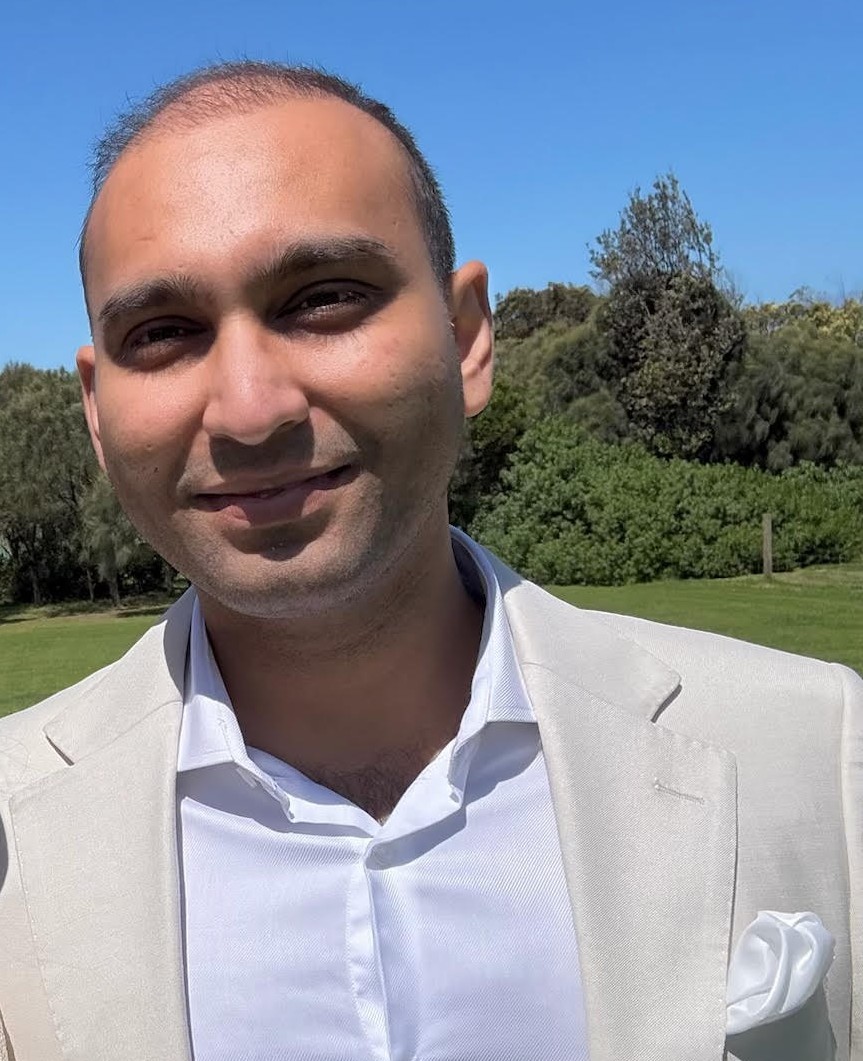
Abhishek Aggarwal
Abhishek Aggarwal has walked many paths, both outward and inward, in search of meaning, understanding, and something deeper than the answers life seemed to offer. After completing his education in Melbourne, Australia, he stepped into the world with knowledge, ambition, and the belief that success could be built through hard work. Life, however, had different lessons in store. His journey carried him through an unusual variety of roles, from managing restaurants and kitchens to overseeing construction sites, working in banking, and taking on countless jobs along the way. Each experience brought its own struggles, victories, failures, and insights. Yet, beneath the appearance of a life moving forward, something remained unresolved. Anxiety, depression, panic attacks, financial pressures, family challenges, and personal crises forced him to confront questions that achievement could not answer. Why can life feel empty when everything appears to be in place? Why do we continue searching outside ourselves for something that may only be found within? It was during some of the most difficult periods of his life that Abhishek began a deeper journey inward, not in search of quick answers, but of understanding. He began questioning the mind, emotions, identity, existence, spirituality, and the very nature of life itself. That journey became *Me for Myself: When Nothing Makes Sense*. Born not from a place of certainty, but from struggle, reflection, and an honest search for meaning, the book brings together his observations on the human mind, the weight of emotions, and the questions that quietly follow us through life. Abhishek does not present himself as someone who has found all the answers. Instead, he invites readers to pause, look within, question what they have been taught, confront the parts of themselves they would rather avoid, and perhaps discover that some answers were never meant to be found outside themselves.
More about Abhishek Aggarwal →